
Mold Testing vs Mold Inspection in Huntersville, NC
Testing tells you what is in the air or on a surface. An inspection tells you where the water is and how far the problem runs. In a Huntersville house, the inspection is the one that finds the condensate line and the parapet leak.
Get a call back
Fill in the form or call (980) 250-4059. Calls are answered day and night.
§ 01 / 08
The short answer
A test is a sample sent to a lab: air, a tape lift, or a swab, with results that name spore types and counts. An inspection is a walkthrough by someone who hunts moisture: meters, thermal checks, and eyes on the places water hides. If you can already see mold, you do not need a test to know it is there. You need the source. If you cannot see anything but the house smells, the inspection is where the answer gets found.
Which one you need depends on the house and on what you are trying to learn.
§ 02 / 08
Mold testing: what it actually is
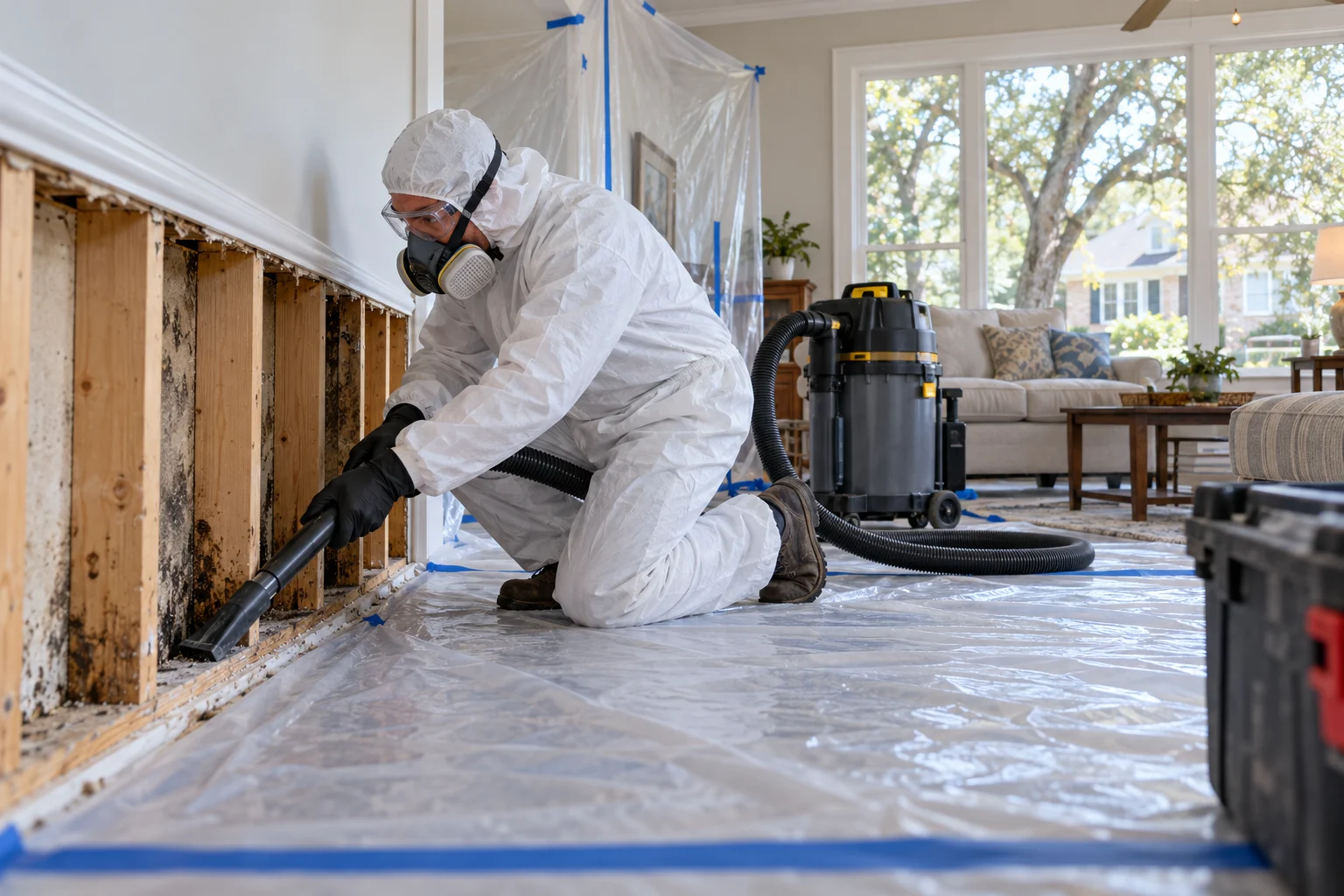
Testing collects a sample and measures it. Air sampling pulls a known volume of air past a collection cassette, and a lab identifies the spore types and counts them. Tape lifts and swabs pick up material from a specific surface and tell you what is growing on that spot. The result is a list and a number, compared against a reference, usually the air outside.
A test result is information, not a fix, and that is where it gets oversold. A report that says elevated spores confirms that something is growing, which in most cases the homeowner already suspected. The test does not say which wall, which leak, or how far the colony runs. It is a thermometer, not a diagnosis, and a thermometer does not stop a fever. In Huntersville, the test earns its keep at the end of a job, as the clearance check that shows the indoor air is back in line with the outside, and anywhere a homeowner needs documentation of what was present. The rest of the time, it is a step that can be skipped or saved for later.
§ 03 / 08
Mold inspection: what it actually is
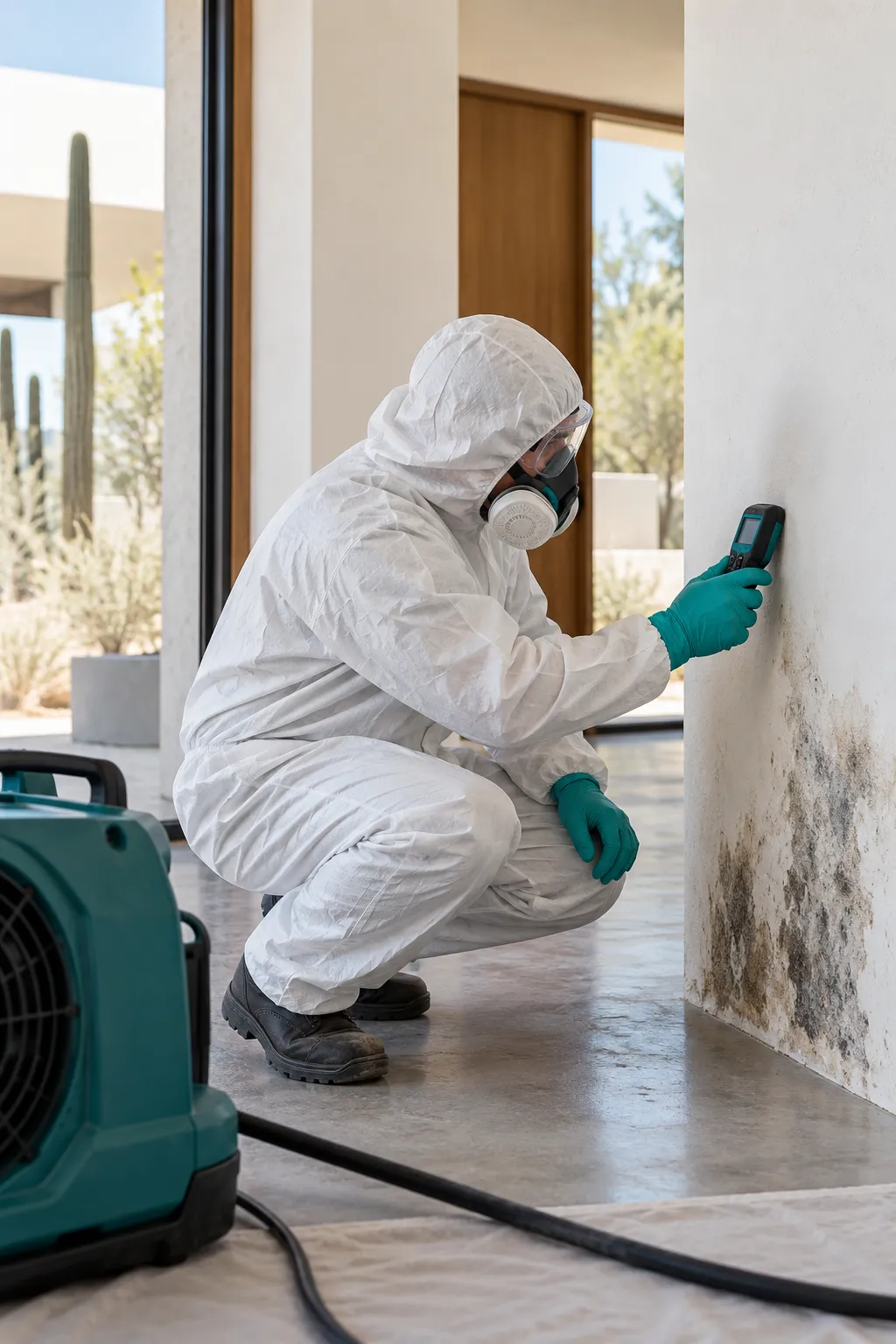
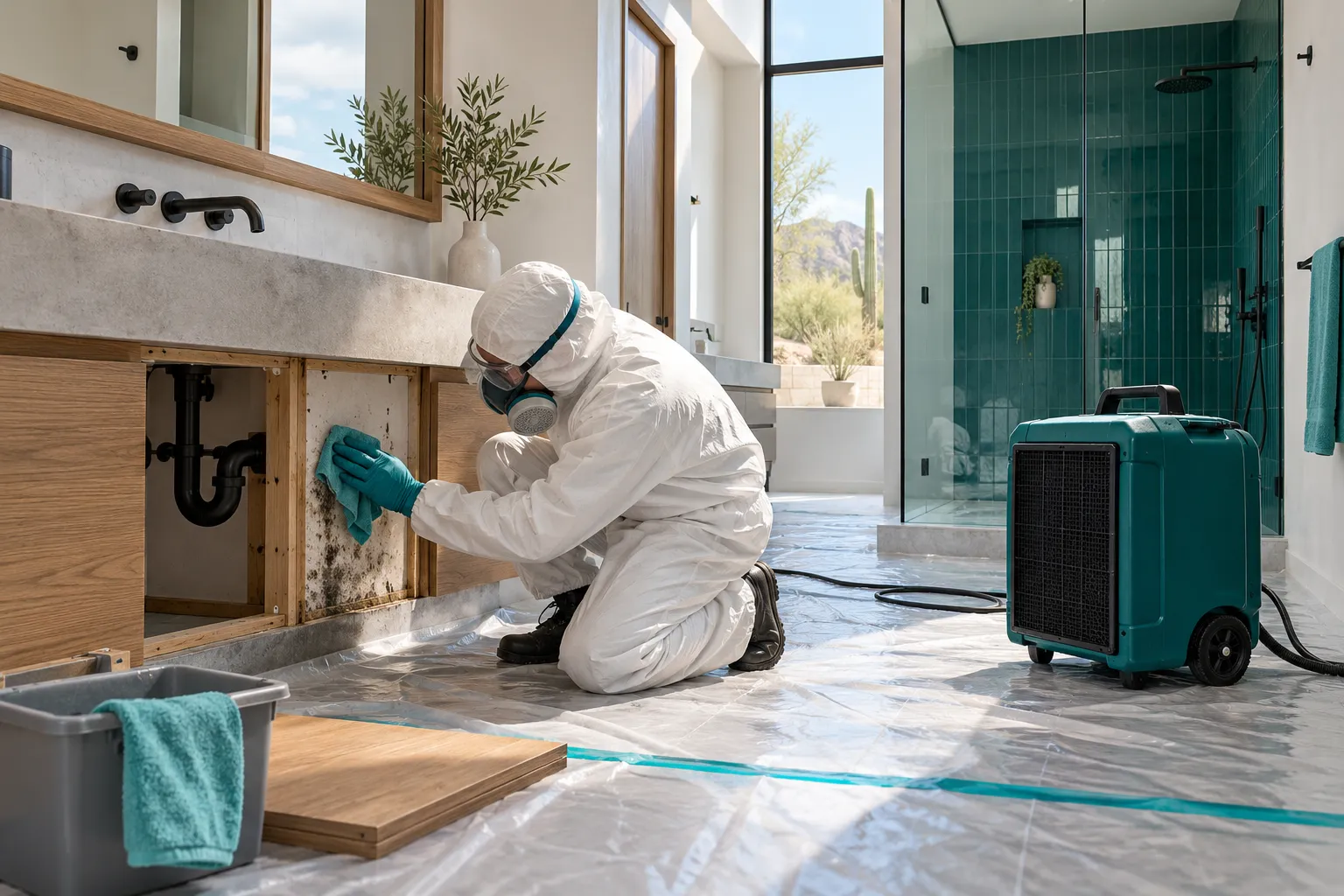
An inspection is a hunt. It starts with the history: how long the house sat, whether the AC was running, where the storms hit. Then the walkthrough, with a moisture meter on walls and floors, thermal readings on ceilings, and a flashlight in the places water hides: under sinks, behind vanities, along condensate lines, at roof penetrations, against parapet flashing.
The deliverable is not a spore count. It is a map: here is where the water is entering, here is how far the moisture has moved, here is what needs to come out, and here is what can be dried in place. A good inspection ends in a written scope, which is also the only way to compare remediation quotes honestly. The inspection is the step that turns a smell into a sentence: this line dripped onto that joist for eight weeks. That is the difference between information and an answer, and it is why the mold inspection and testing page puts the walkthrough first.
§ 04 / 08
Where testing fails here
The closed-house summer defeats testing in a specific way. A Huntersville second home sits sealed from May to October. The owner comes back to a musty smell, orders an air test, and gets a report of elevated spore counts somewhere in the house. The report is accurate and useless. It does not say that the condensate line above the hallway ceiling dripped onto the drywall for eight weeks, because an air sample cannot see a line.
Testing also fails when the colony is not actively releasing spores. A colony that dried out over a hot summer can go quiet, and a quiet colony is exactly the one that wakes up on the first humid week or the first drip. A clean test result from a closed house is a snapshot of the air, not a verdict on the walls. And the commercial failure is the worst one: a test sold as the solution, a report delivered with a remediation upsell and no water answer anywhere in it. A test result is not a fix. The removal vs remediation page explains what a fix actually includes.
Line open now
Mold growing right now?
Describe what you see or smell. You do not need to diagnose anything yourself.
§ 05 / 08
Where inspection fails here
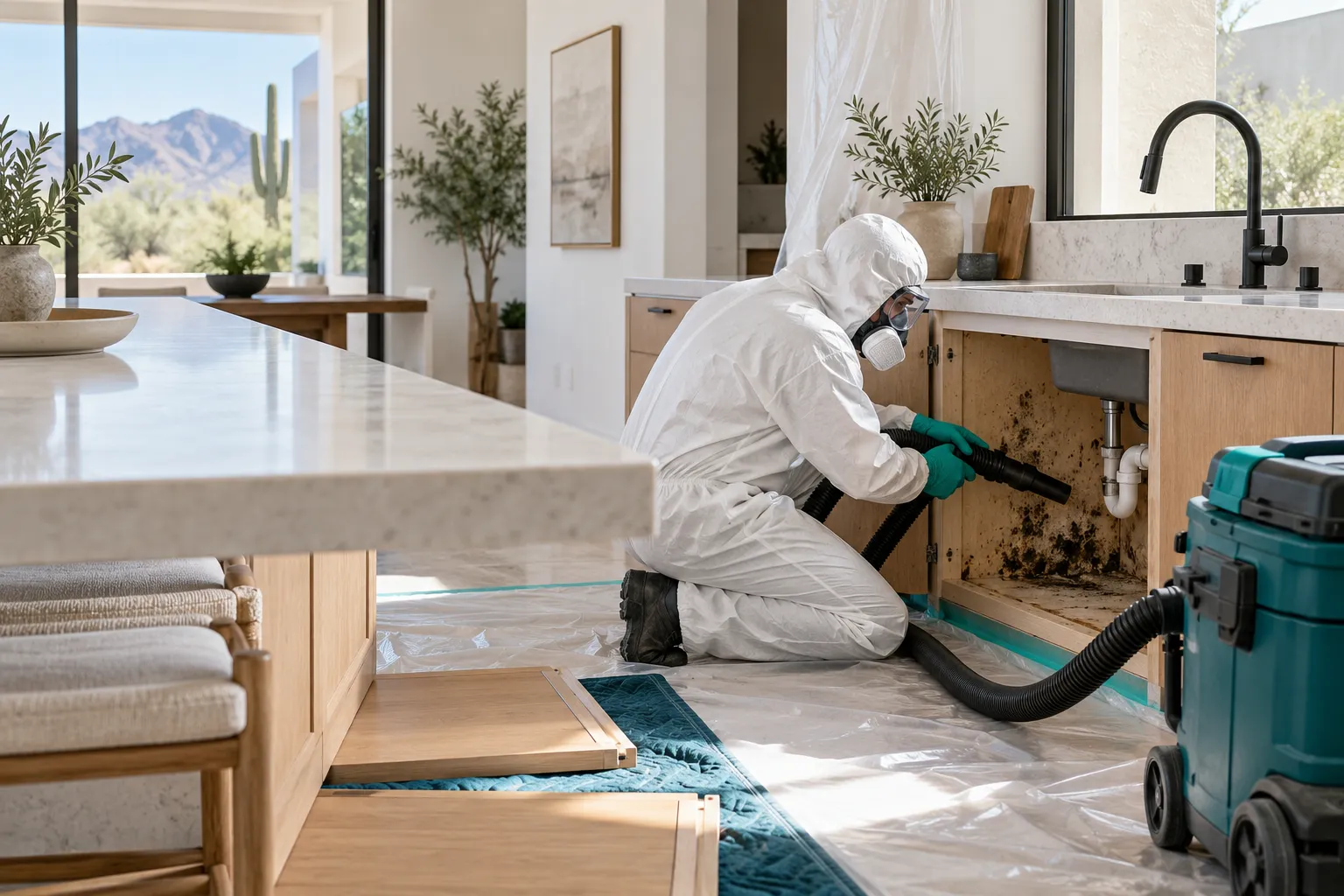
An inspection fails when it is a drive-by. A quick walk, eyes on the visible surfaces, nothing opened, no meter on the walls, and a quote handed over at the door. That catches the mold you could already see and misses everything that matters in Huntersville: the condensate line inside the ceiling, the summer storm water trail above the drywall, the parapet leak that only shows itself after rain. If the house has a ceiling that the AC lines run through, the hvac mold page explains what a real look at that space involves.
The other local trap is the inspection that is really a sales call. A low-price visit whose entire purpose is generating a big remediation quote, with the source named loosely and the scope written later. A real inspection is measurable: meters out, questions asked about how the house sat, and a written answer about where the water came from. If the visit ends without that, it was not an inspection.
§ 06 / 08
What it costs and what drives the number
A test is a line item, and it moves with how many samples are taken and which lab runs them. An inspection is a visit, and its number moves with the size of the house and how much of it needs opening up. Both are small next to the number that matters, which is the repair to the water source, and that number depends entirely on what the inspection finds. The pricing page shows how the pieces of a scope fit together, so a test bill and an inspection bill never get mistaken for the job itself.
§ 07 / 08
What good work looks like in Huntersville
- Inspection comes first. You cannot sample your way to a source, so the water gets found before anyone sells you a cassette.
- Tests earn their keep in two places: clearance after a job, and documentation when a claim needs it.
- Lab reports need plain language, and a test result is never a solution.
- A real inspection ends with a named source and a written scope, not a speech.
§ 08 / 086 questions
Mold Testing vs Mold Inspection: your questions
01Do I need a mold test if I can see mold?
No. You can see it. What you need is the water source and a plan for the material. Save the test budget for the clearance check at the end.
02What does an air test actually tell me?
Which spore types are in the air and at what levels, at that moment, in that room. It says nothing about where the water is or how far the growth runs.
04How is a clearance test different from a regular test?
A clearance test runs after remediation and compares the indoor air against the outdoor air. The job is done when the numbers line up, not when the paint dries.
05Will an inspection damage my house?
A standard walkthrough is non-invasive: meters on surfaces, not holes in walls. If a cavity needs looking into, that is a separate, discussed step.
06Which comes first, testing or inspection?
Inspection. Find the water, map the damage, then decide whether any sampling is even useful.