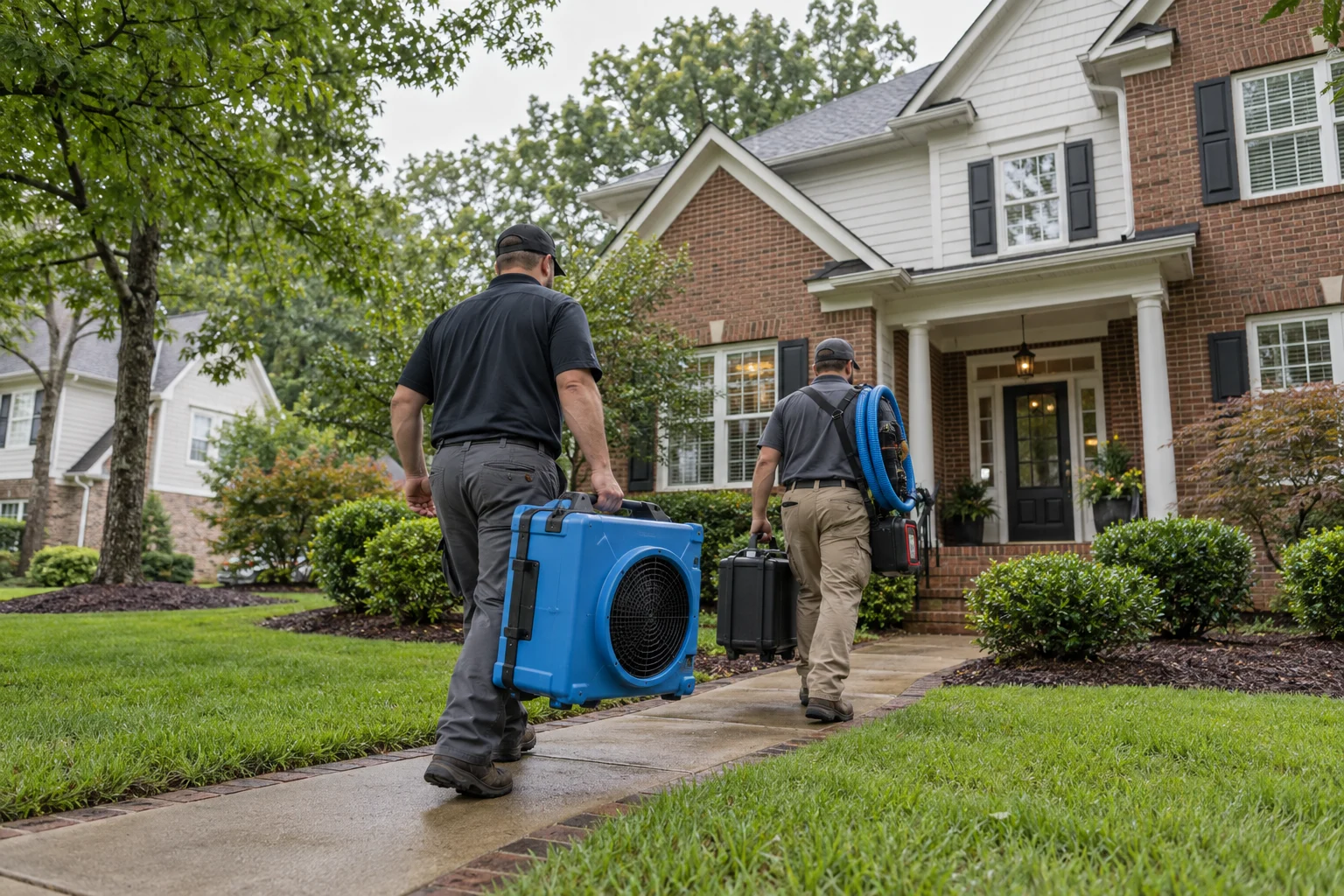

Emergency Water Extraction in Huntersville, NC
You have standing water in the house, and every hour of it eats into the 24 to 48 hour drying window. Call day or night or send the form, and someone from our team will call you back soon.
Get a call back
Fill in the form or call (980) 250-4059. Calls are answered day and night.
§ 01 / 17
Standing water out, floors checked with a meter
Emergency water extraction is the step that gets standing water out of a house fast, before drying can even start. Extraction is measured in hours and drying is measured in days. If water is still running into the house, shut it off first, then call (980) 250-4059.
- Pumps move the big volume of water first.
- Extractors pull what is left from carpet, pads and the low spots of the floor.
- Porous materials that sat wet are sorted from the hard surfaces that stay.
- A moisture meter checks the floor under the furniture, the baseboard and the first course of drywall.
- A musty smell after the water sat points to a mold check.
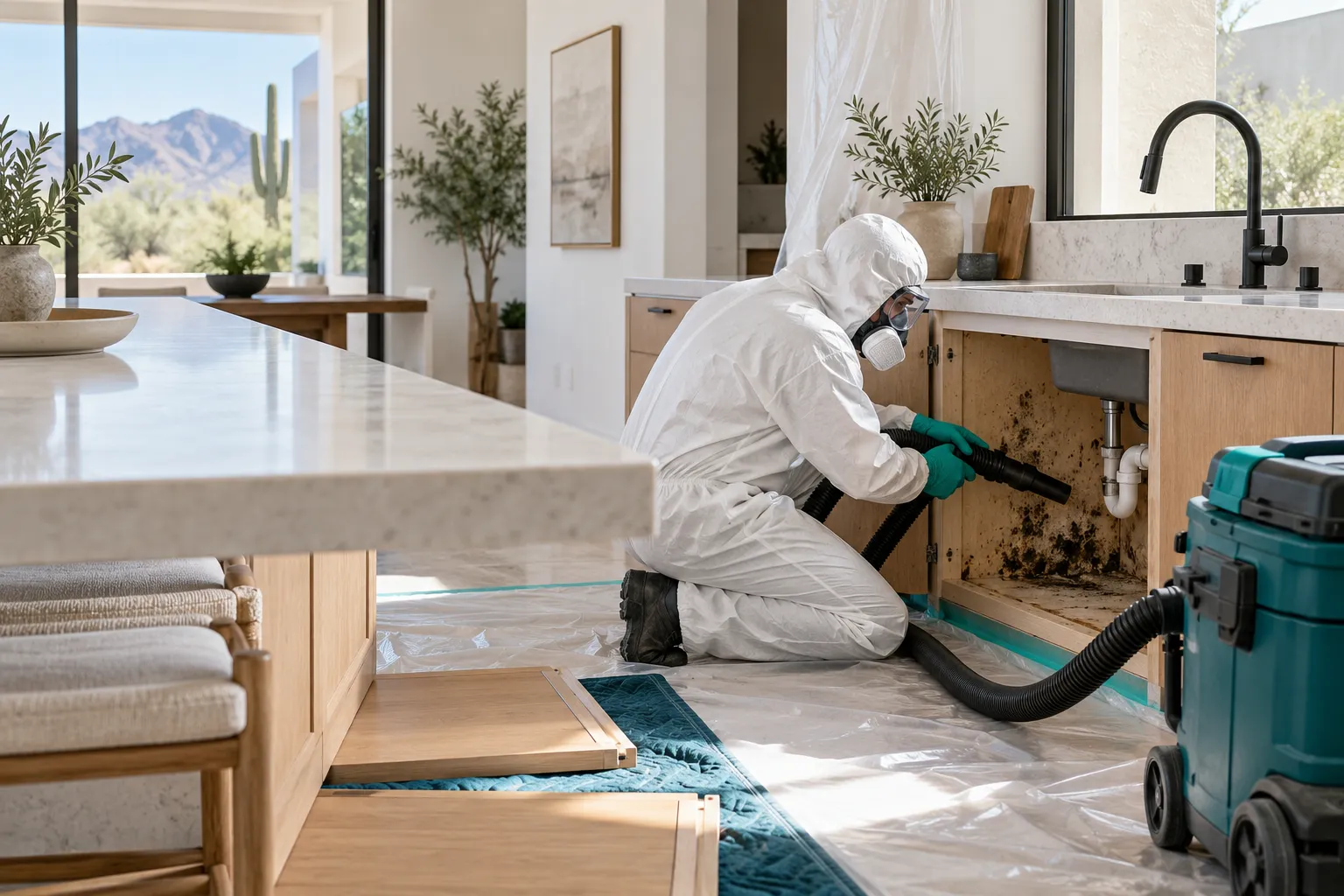
§ 02 / 176 signs
6 signs you need emergency water extraction
Standing water does not wait. Drying cannot finish while water sits on the floor, and the EPA's drying window for wet materials is 24 to 48 hours. Storm water is contaminated until someone tells you otherwise.
- 01
Standing water on the floor
Fans and dehumidifiers cannot work on a floor full of water.
- 02
Water soaked into carpet and pad
Carpet, pad and soaked particle board usually go if the water was dirty or sat long.
- 03
A burst supply line, an overflowing AC pan or a failed water heater
These are the typical calls.
- 04
Storm water that found a way in
Stay out of the water and keep kids and pets away.
- 05
Water across several rooms, or a second floor that drained into the first
Larger losses take longer, and pump work can continue after the extractors are done.
- 06
A floor that looks empty but still holds water
The meter decides when extraction is done.
§ 03 / 173 steps
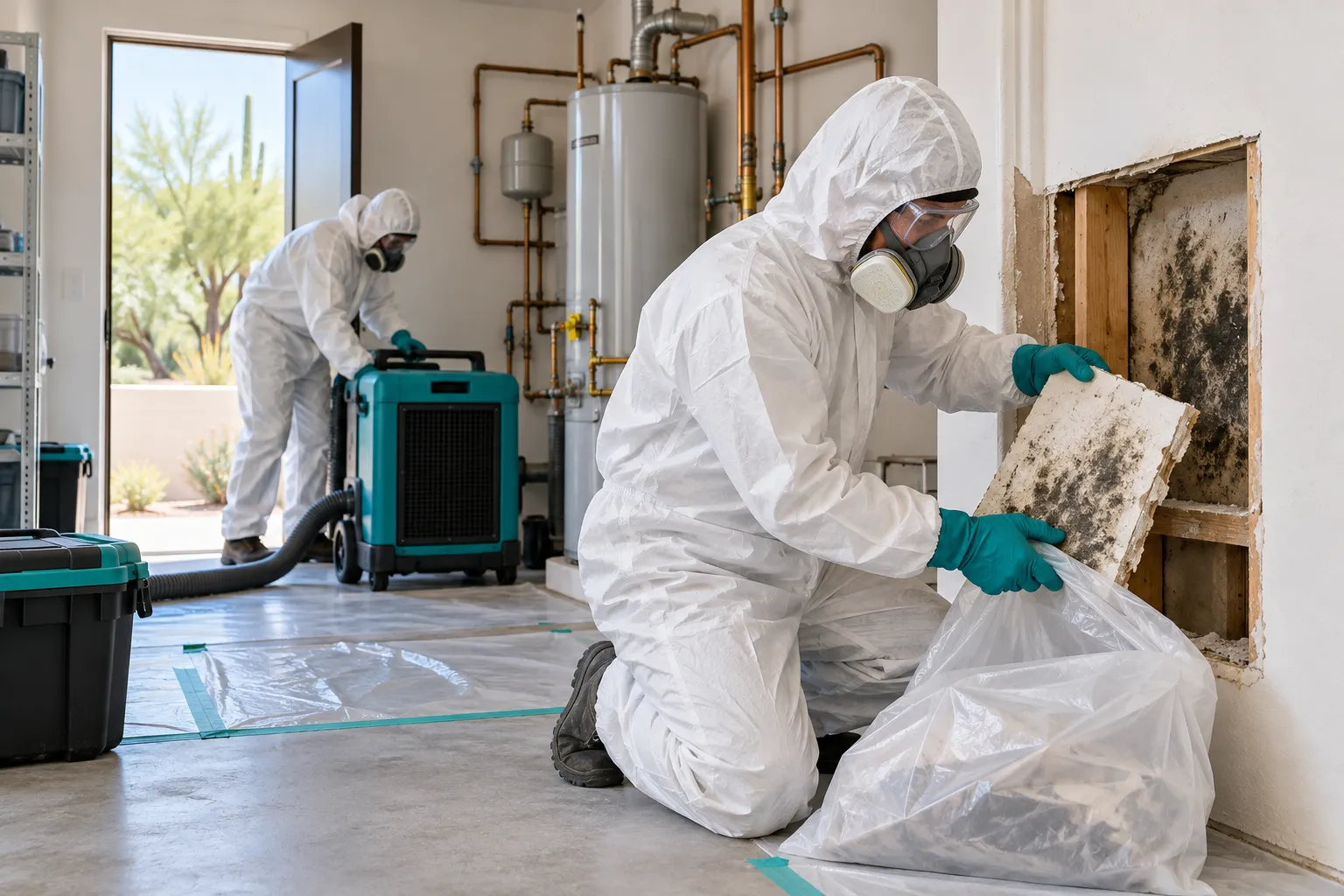
How water extraction works, in 3 steps
- 01
Call or send the form, day or nightTell us what you see or smell, and where.
- 02
Someone from our team calls you backWe go over what you found.
- 03
Pumping out, drying and a moisture check followThe source is shut off first.
§ 04 / 17
What does emergency water extraction cost?
The published range for water extraction alone is $500 to $3,000, with drying by fans and dehumidifiers running $500 to $2,500 and extraction plus drying typically priced at $3 to $7 per square foot when the two are combined (Home Restoration Costs (opens in a new tab)). Most complete jobs land between $1,200 and $8,500 depending on how far the water spread (Home Restoration Costs), and a typical restoration job is often placed at $1,200 to $5,000, with a national average near $3,000 (Fixr (opens in a new tab)). Those are market figures from published cost guides, checked October 2026, not a bid. The final number follows the crew's walkthrough: how big the area is, what the water touched, and how dirty it is.
§ 05 / 17
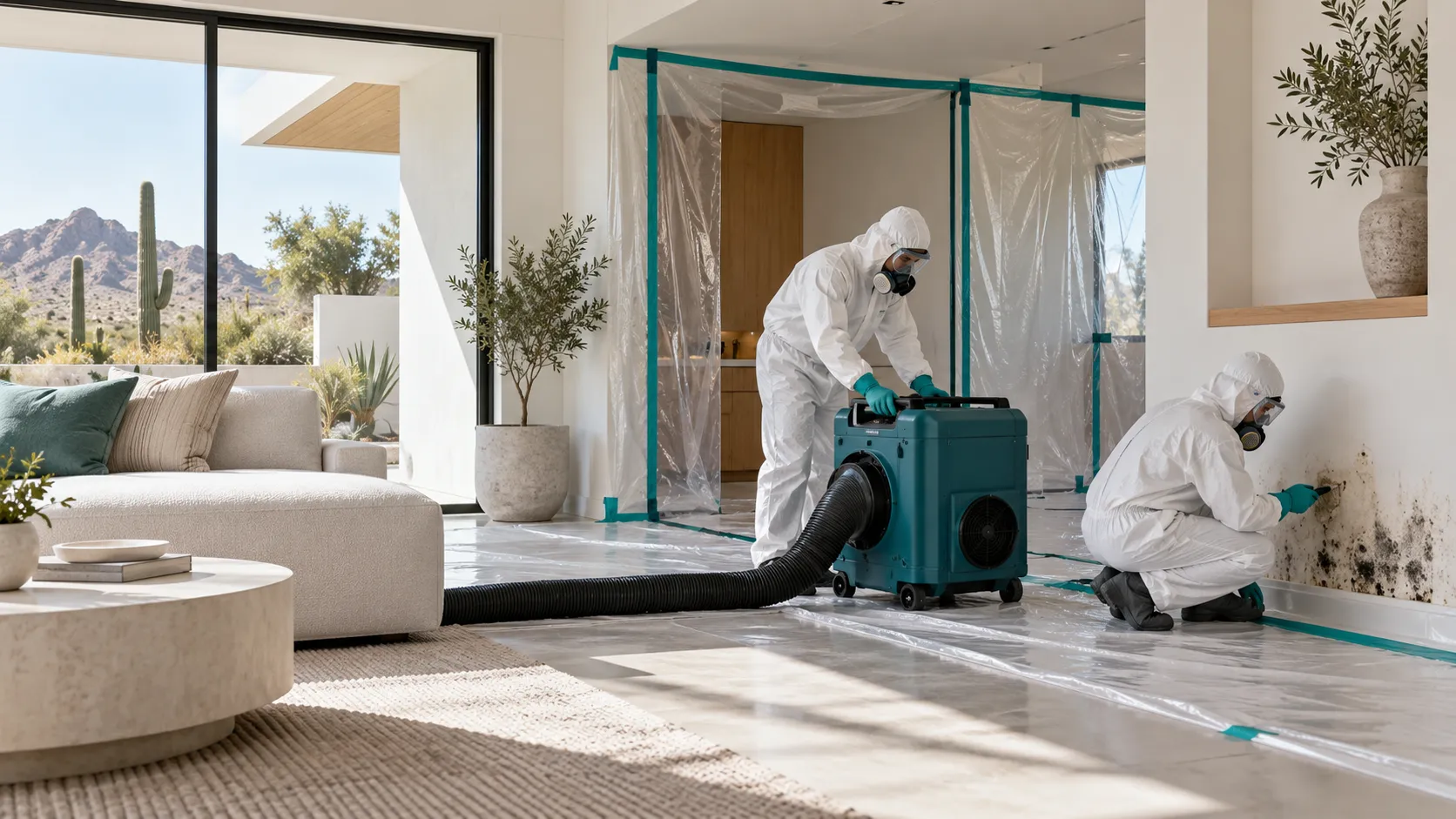
What is emergency water extraction?
Emergency water extraction is the work of pumping and vacuuming standing water out of a home, fast, so that drying can begin. It starts with stopping the source. Then pumps move the big volume of water, and extractors, which are strong wet vacuums with a wand, pull what is left in carpet, pads and the low spots of floors. The typical call is a burst supply line, an overflowing AC pan, a failed water heater, or storm water that found a way in. Extraction is measured in hours and drying is measured in days, and both come before any repair. If water is still running into the house, shut it off first, and if you cannot, say so when you call, because that changes the visit.
§ 06 / 17
What should you do while you wait?
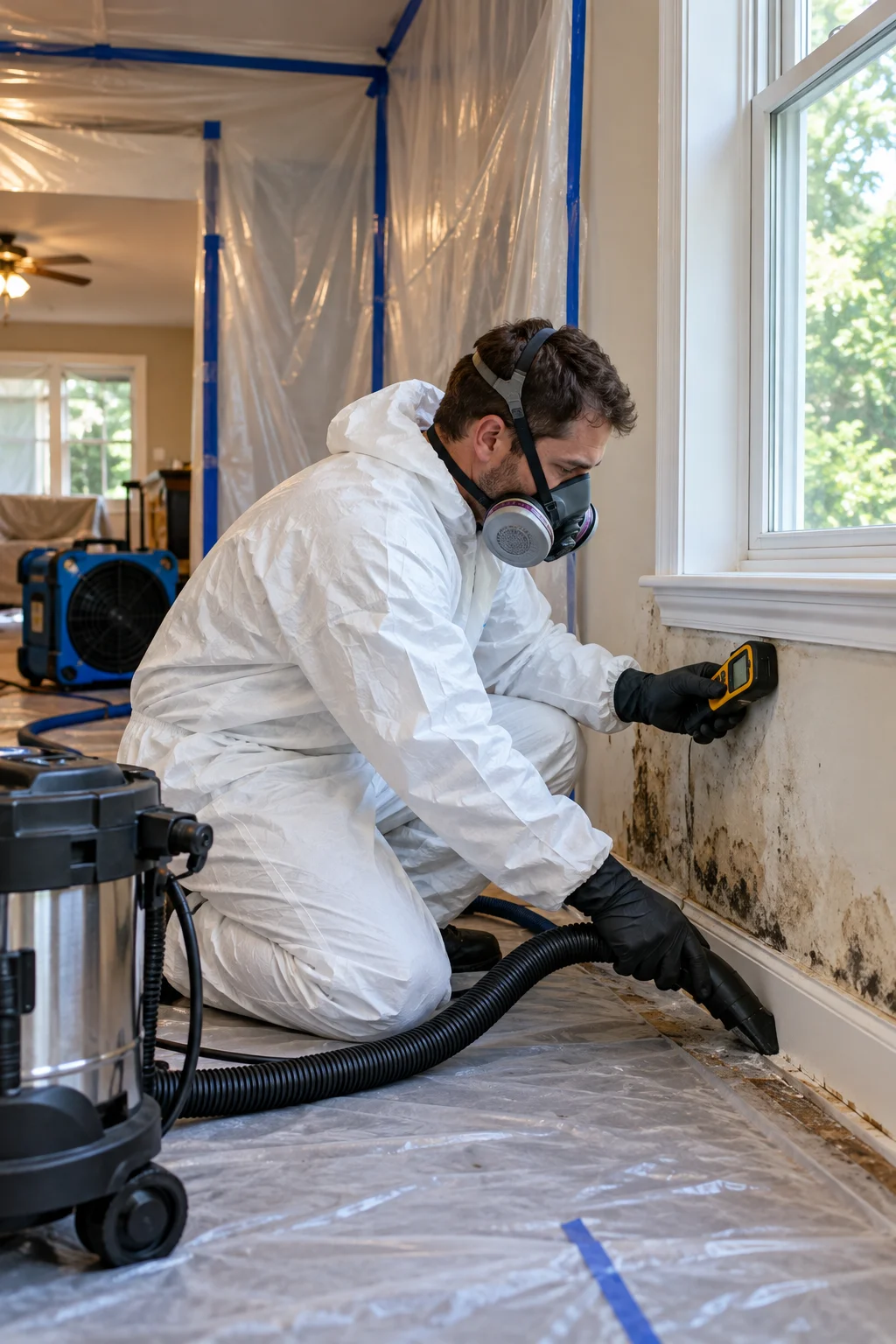
Keep everyone out of the wet area, pets included, and do not run your own shop vacuum on water that might be dirty, because that spreads contamination instead of removing it. If the source is still dripping, put a pot or towels under it. Turn off power to the wet rooms at the breaker only if you can reach it without touching water. Photograph everything before anything moves: the water line on the walls, the source, and the items that got wet. Move what is easy to move, rugs, papers, electronics, bags and shoes, to a dry room. Then leave the rest alone. The less the water gets walked through, the less it spreads, and the faster the visit goes when the crew arrives.
§ 07 / 17
What gets pumped out, and what gets thrown away?
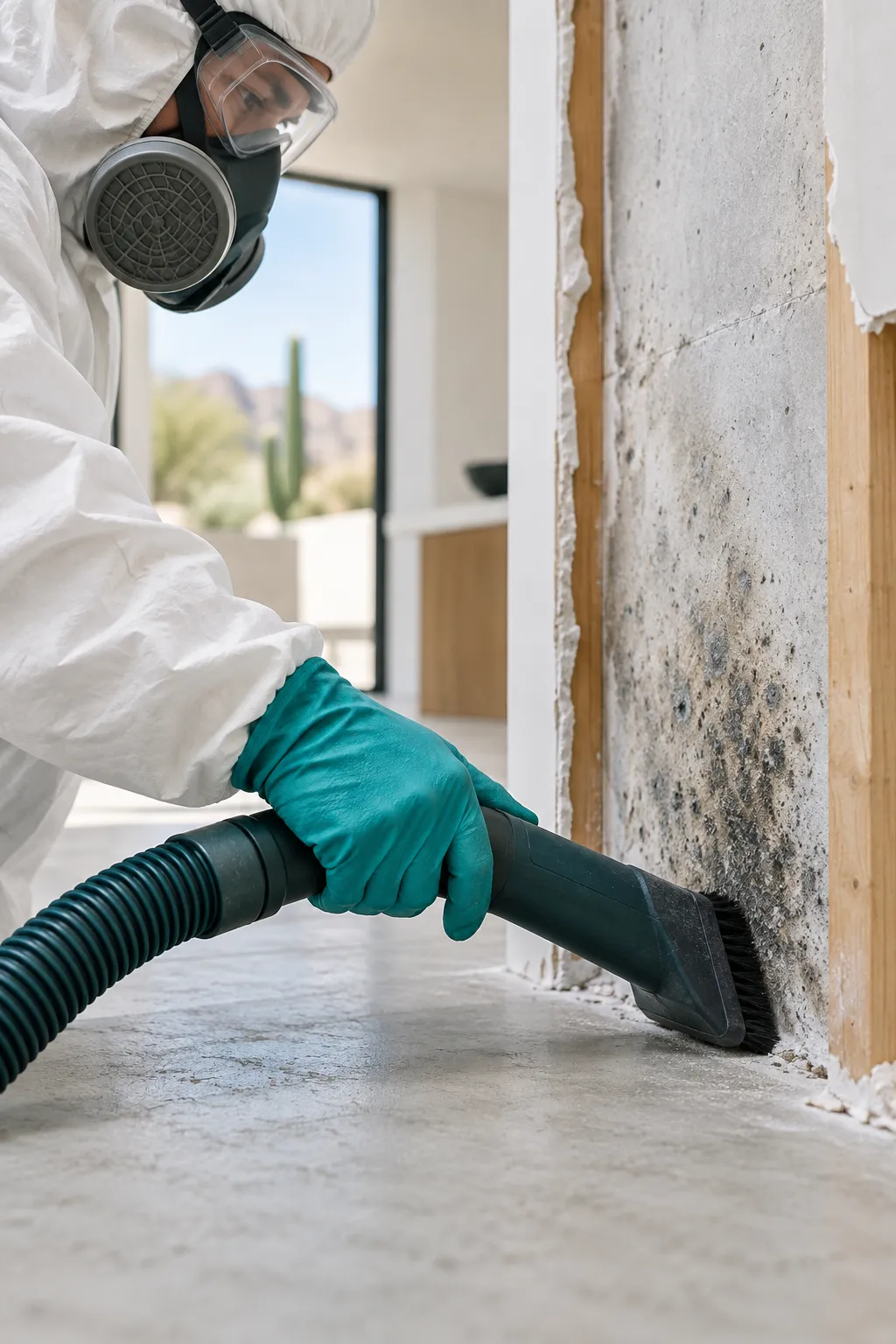
Standing water comes out first, along with everything only water touched: the water in the carpet and pad, the low spots, the puddles under furniture. Then comes the harder question, which materials stay and which go. Carpet, carpet pad and soaked particle board usually go if the water was dirty or sat long. Hard surfaces stay: tile, concrete, sealed wood, metal, glass. Wet drywall at the bottom of a wall is sometimes removed so the cavity behind it can dry, and it can sometimes be dried in place instead if the water was clean and the clock is young. The rule of thumb: if it is porous and it sat wet, plan on losing it. The hard calls get made with a meter at the edge of the wet area, not with a guess from the doorway.
Line open now
Water still on the floor right now?
Describe what you see or smell. You do not need to diagnose anything yourself.
§ 08 / 17
What does an extractor actually do?
An extractor is a strong wet vacuum. The technician runs a wand across the floor, and the machine pulls water up through it and pumps it out to a tank or a drain. The wand reaches into carpet fibers and the low spots a mop cannot, and a second pass pulls more water out than a stack of towels ever will. The deepest water goes to pumps first: a submersible pump moves the big volume when the floor is a pond, then the extractor takes over for everything it can reach. Extraction is about volume. The meter decides when extraction is done, because a floor that looks empty can still be holding water under the surface. The wand also tells the technician where the floor changes sound, and that is where water hides under hard surfaces.
§ 09 / 17
Why does extraction come before drying?
Because air movers and dehumidifiers work on moisture in the air and inside materials, not on a floor full of water. Fans blowing over standing water mostly make ripples, and dehumidifiers fight a losing battle while there is still a pool on the floor. The order that works is stop the source, extract the water, then dry the structure, with readings as the referee. There is also a clock, and it is the reason all of this gets called emergency: the EPA's (opens in a new tab) drying window for wet materials is 24 to 48 hours, and every hour of standing water eats into it. Past the window, more materials get removed instead of saved.
§ 10 / 17
How long does water extraction take?
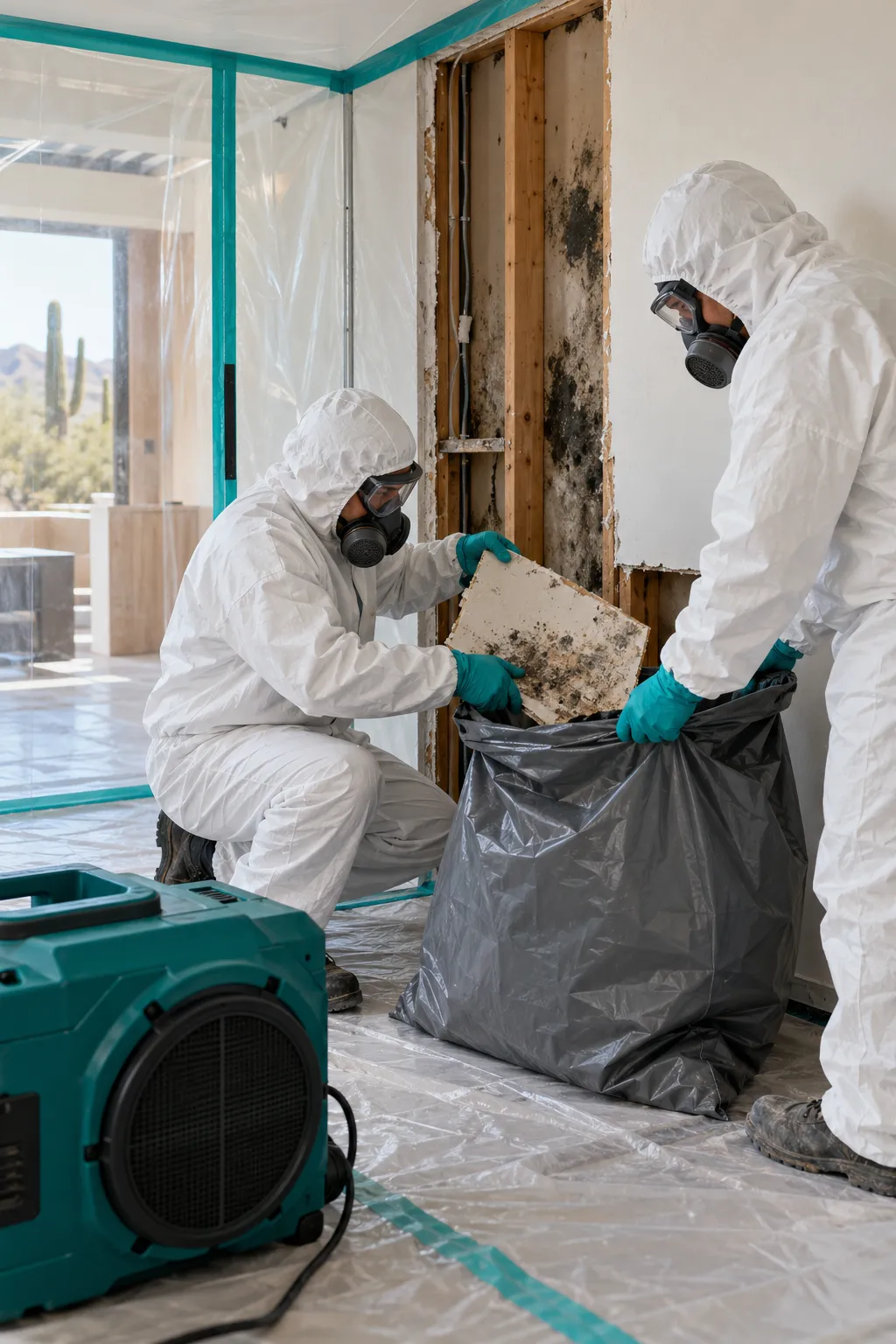
The extraction itself usually runs a few hours, depending on how much water there is and what it soaked into. A burst supply line on tile can be mostly gone in an hour or two. A larger loss, water across multiple rooms, water in carpet over a big area, or a second floor that drained into the first, takes longer, and the pump work can continue after the extractors are done. Drying, which follows, is measured in days, not hours, and the readings decide when it is complete. If the call comes at night, ask about the schedule for the first drying check, because the first 24 hours are the ones that matter most. After that, the routine settles: readings each day, and equipment adjusted to whatever the numbers say.
§ 11 / 17
What is the difference between water extraction and flood restoration?
Extraction is one step; flood restoration is the whole chain. Extraction gets the standing water out. Restoration covers everything after: drying the structure back to its dry standard, cleaning and sanitizing what survived, removing what did not, and repairing the damage, with the paperwork an insurer wants, started from the first visit. A flood makes the difference matter more, because flood water is treated as contaminated, so the order changes: extraction, then disposal of what cannot be cleaned, then disinfection, then drying. The other half is the part that gets documented: moisture maps, daily readings, and a reopen timeline that the insurer and the family can both follow.
§ 12 / 17
Is dirty water handled differently?
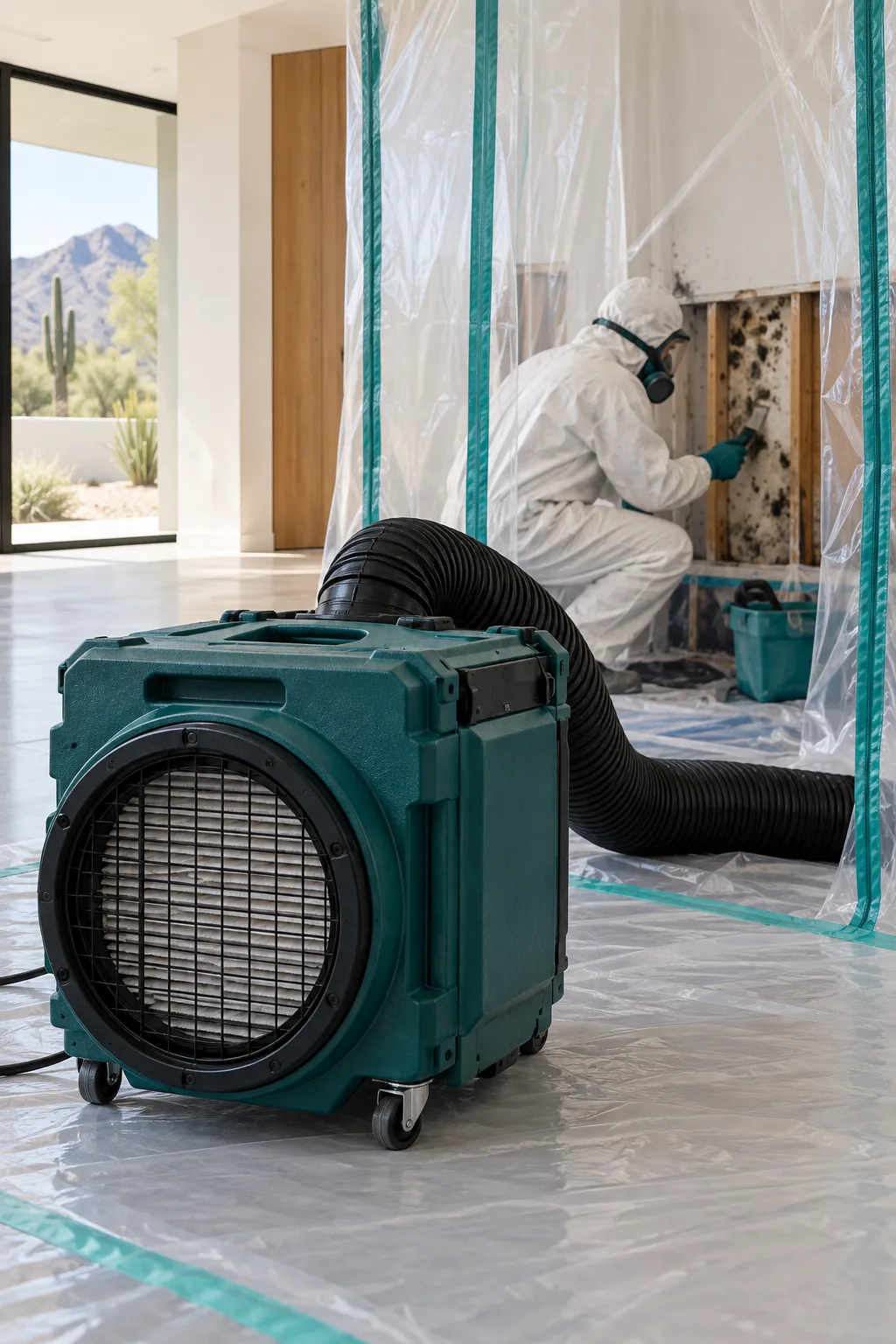
Yes, and it is not a small difference. Clean water from a supply line, gray water from a washer or dishwasher, and black water from sewage or flooding are treated as three different categories, because each one can touch what the others cannot. Clean water often leaves the drywall and trim in place. Gray water calls for removal of most porous materials. Black water takes the strictest path: containment, removal, disposal, and disinfection, with surfaces cleaned before anything dries. The extractor does not know the difference; the plan does. Describe the source when you call, because it decides the whole visit. When the source is unclear, the safe assumption wins: nobody dries a maybe-dirty floor as if it were clean.
§ 13 / 17
How do you check that all the water is out?
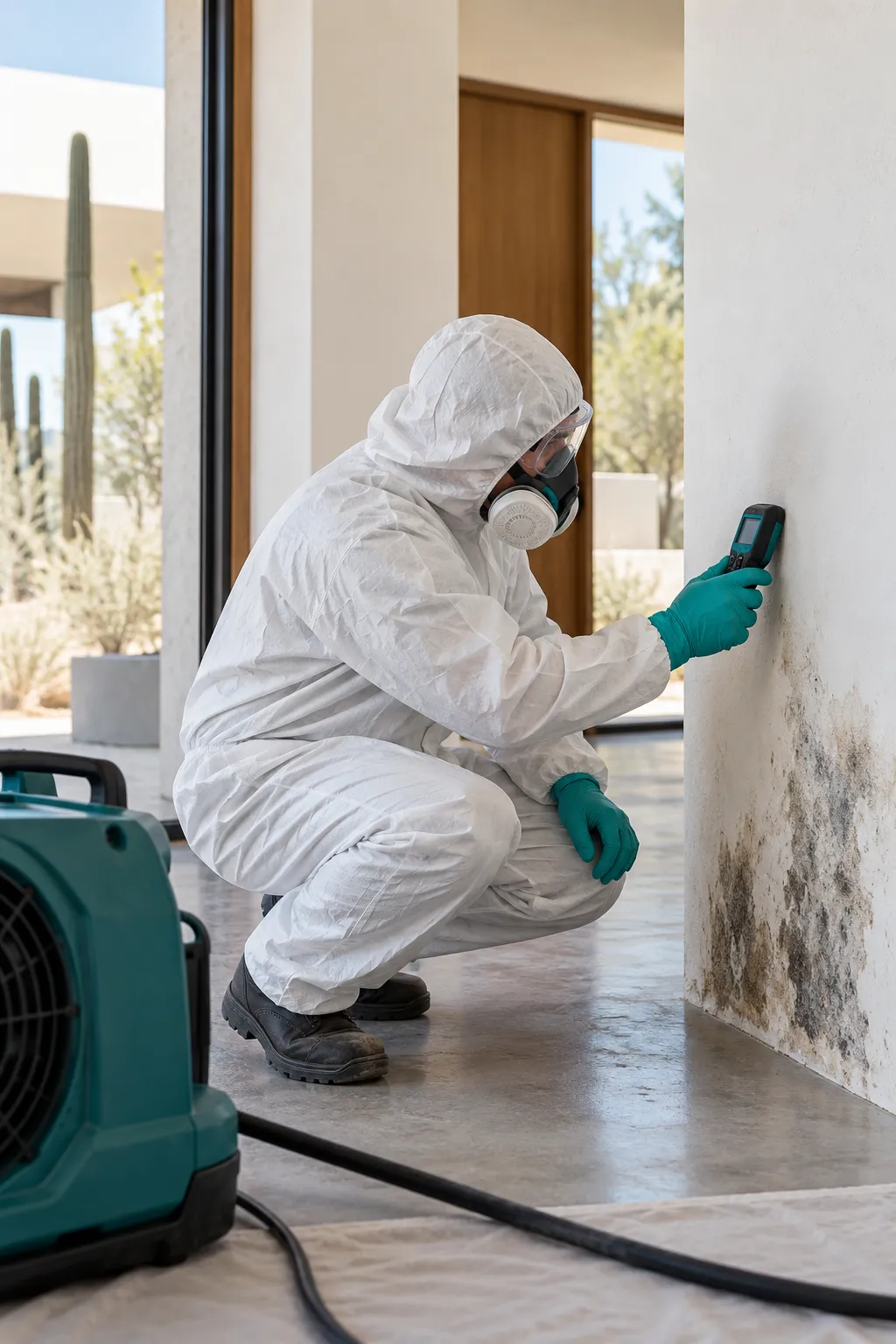
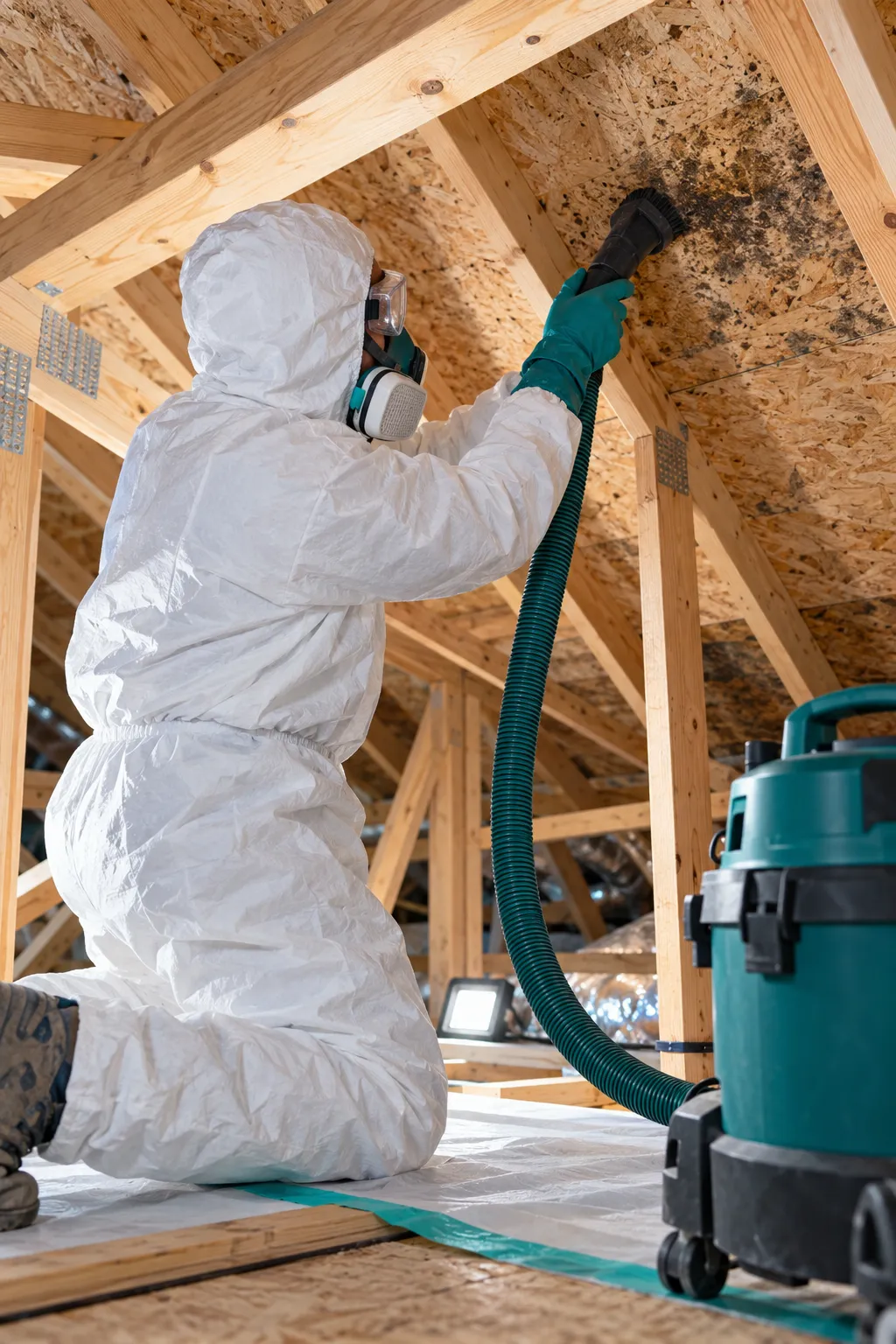
A broom and a flashlight are not a check. The check is a moisture meter, and it goes everywhere the water could have reached: the floor under the furniture, the baseboard, the first course of drywall, and the room next door, because water travels along the slab before it shows. Readings get compared against a dry standard, like the IICRC S500 (opens in a new tab), and repeated until they match. The check gets repeated if anything changes, too, because a room that reads dry on Monday can read wet again on Wednesday if the source was not fully stopped. One more check matters after extraction: the smell. If the water sat long enough for a musty odor, that is a sign growth may have started in a place you cannot see, and the answer is a mold check, not more air freshener.
§ 14 / 17
Does extraction keep mold from starting?
Extraction is the first half of the answer; drying is the second half. Mold needs moisture, and the EPA's window, 24 to 48 hours, is the time to get materials from wet to dry. Extraction starts that clock properly, because drying cannot finish its job while water is still sitting. What extraction cannot do is dry inside a wall, under the flooring, or inside a cabinet base. That is why readings follow extraction, and why anything that stayed wet past the window gets a closer look. When the water was found late, the mold question is worth asking early: the mold remediation page covers the removal side, and inspection and testing covers how the answer gets confirmed. If testing is needed, it happens before anything gets closed back up, which is the only order that saves a second opening.
§ 15 / 17
Which towns do you cover?
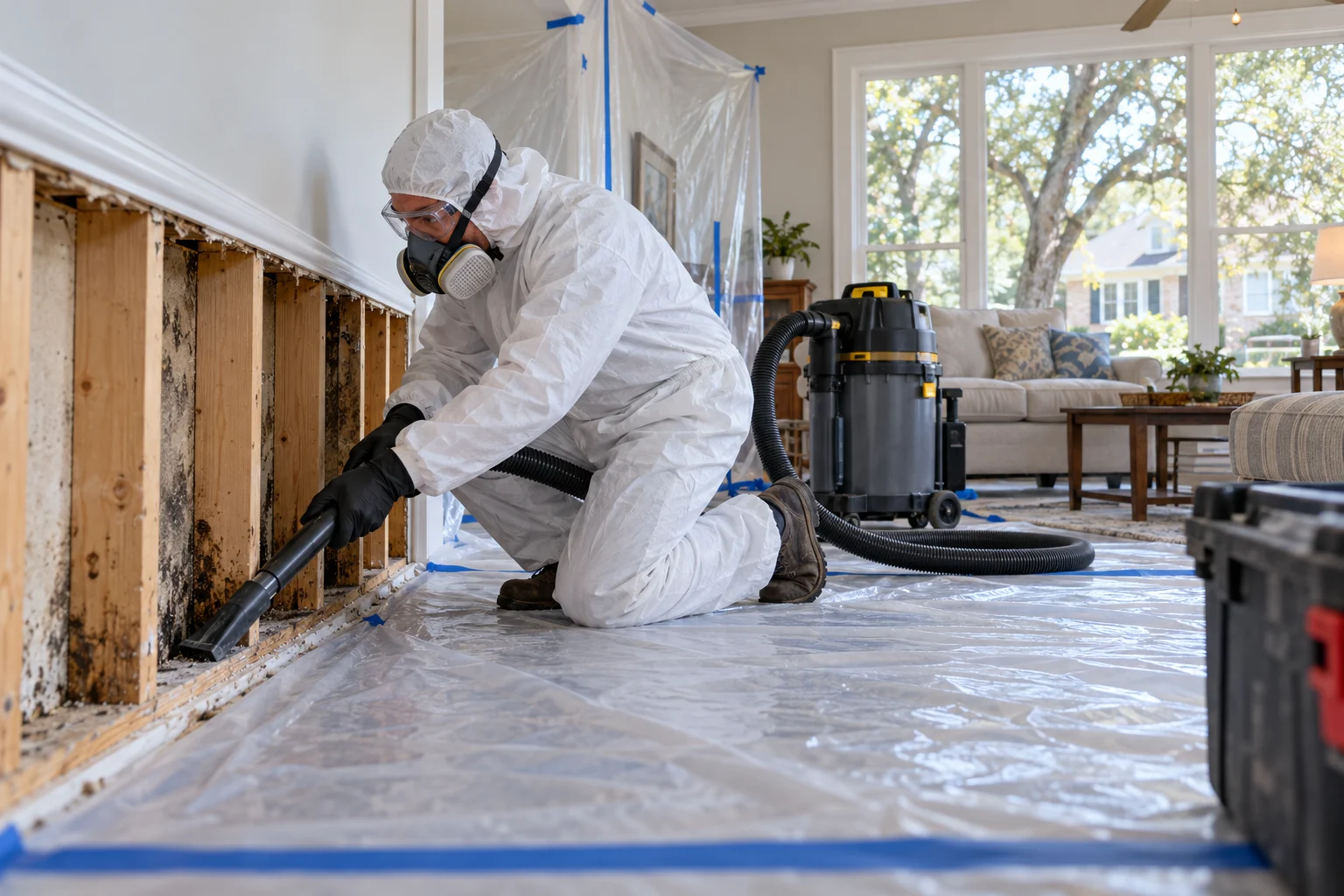
In Huntersville, roof leaks, blocked drainage and AC condensate can leave attic materials damp. Inspect flashing, roof penetrations and the insulation below a new ceiling stain. Wind-driven rain may reach a gap that does not leak in light weather. A moisture reading helps distinguish an old mark from an active leak. Fix the water source before removing damaged materials, and inspect the same location again after rain. Keep gutters and downspouts clear and have a qualified contractor assess roof repairs and safe attic access. For current weather hazards, consult the National Weather Service.
§ 16 / 175 questions
Questions people ask
01Is one fan enough to dry a room?
No. Drying needs air movement and dehumidification together, and it needs the standing water gone first. A single household fan over a wet floor mostly moves humid air around the room.
02Can a shop vacuum replace an extractor?
For a small, clean spill, a shop vacuum can pull up surface water. The limits: it cannot reach into carpet pad, it does not measure anything, and it is not appropriate for dirty water. When in doubt, leave it for the crew.
03How fast can someone get to my house?
Calls are answered day and night, and the visit gets scheduled around how much water is in the house. Describe the source and the wet area when you call, and the first answer will include the timing.
04Does insurance pay for water extraction?
Often, when the cause is a sudden plumbing failure, because extraction is the first line of a covered claim. Flood and seepage come with their own rules, and the insurer decides. Photos and the extraction records help either way.
05What if the water came from outside, from a storm?
Then treat it as contaminated until someone tells you otherwise: stay out of the water, keep kids and pets away, and say storm water when you call, because that changes the plan to containment, disposal and disinfection before drying.
§ 17 / 17Keep reading
- Water damage restoration: the full chain, from stopping the water to the final repair.
- Mold remediation and removal: when water left growth behind, and how it gets removed.
- Mold inspection and testing: how hidden moisture and growth get confirmed.
- Pricing: published ranges by job type, with every source listed.
- All service areas: Huntersville and the 5 towns around it.