
HVAC, AC and Air Duct Mold Removal in Huntersville, NC
You smell something musty when the AC runs. Call day or night or send the form, and someone from our team will call you back soon.
Get a call back
Fill in the form or call (980) 250-4059. Calls are answered day and night.
§ 01 / 11
Air handler cleaned, moisture source found
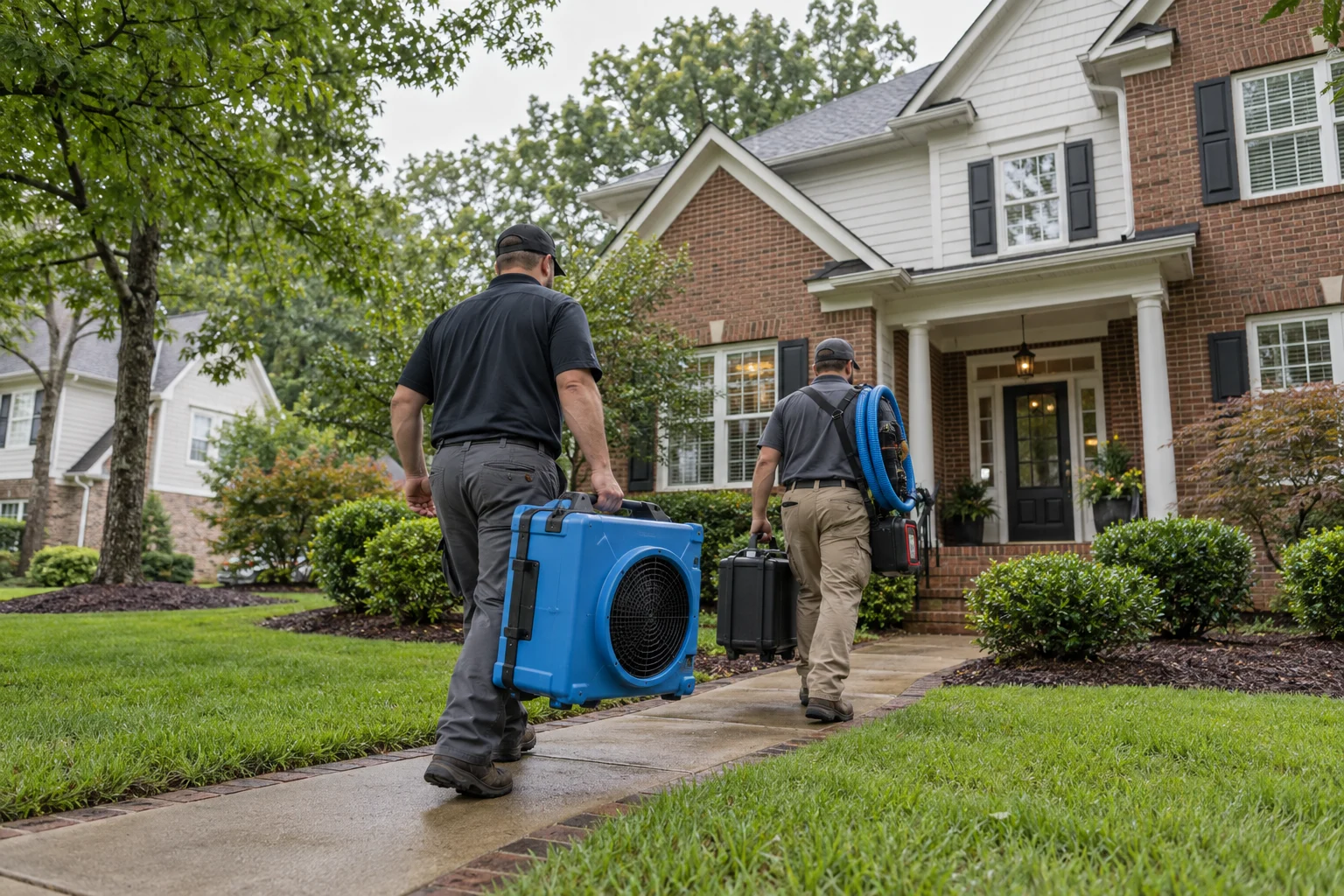
Mold grows in air conditioners, air handlers and ductwork in Huntersville, North Carolina. We serve Huntersville, North Huntersville, Cornelius, Davidson, Mooresville, Denver, Kannapolis and Concord; if your system smells musty or you can see growth, call (980) 250-4059.
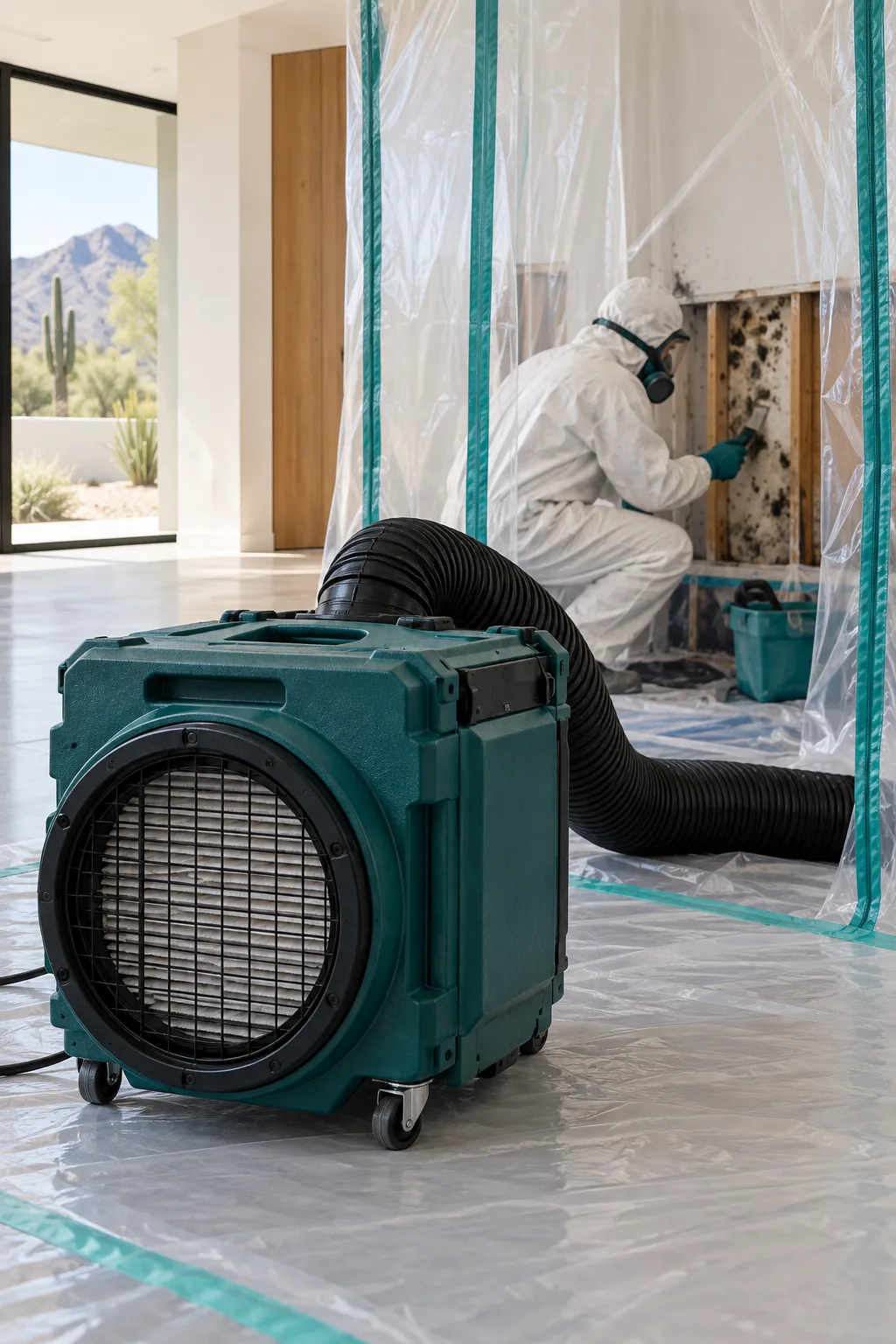
- Containment keeps spores from traveling through the house while the work goes on.
- The air handler is opened and the blower, coil area, drain pan and accessible ductwork are cleaned.
- HEPA vacuuming and air scrubbing capture the spores.
- Everything is dried before the system is closed back up.
- Soaked duct board or flex duct is removed and replaced, and the moisture source is confirmed.
§ 02 / 116 signs
6 signs your AC system needs mold removal
A moldy AC does not keep the problem in one room. When a contaminated system runs, air moves through the air handler and ductwork into every room it serves, and the EPA says not to run a system you know or suspect is contaminated.
- 01
A musty, earthy smell that gets stronger when the AC runs
It is the most common sign.
- 02
Allergy-like symptoms that ease when you are away from home
They return when you are inside again.
- 03
Dark speckling or staining at the air handler or around the drain pan
Check every unit, including the ones in closets, garages and attics.
- 04
Water standing under the unit
A clogged condensate line or an overflowing pan keeps the cabinet damp.
- 05
A musty smell at the vents
It usually points back at the system, not the room.
- 06
A unit that sat off through a closed-up summer
It restarts with growth already under way.
§ 03 / 113 steps
How HVAC mold removal works, in 3 steps

- 01
Call or send the form, day or nightTell us what you see or smell, and where.
- 02
Someone from our team calls you backWe go over what you found.
- 03
Cleaning, drying and a moisture check followThe water problem comes first.
§ 04 / 11
What does HVAC mold removal cost?
Mold removal in Huntersville is priced after an on-site assessment. The affected area, access, moisture source, testing needs and materials that must be removed determine the scope. Published ranges on this site are planning examples carried over from the reference site, not verified local quotes. Ask for a written estimate that separates inspection, containment, removal, drying and any repairs. Compare the same scope of work before choosing a contractor.
§ 05 / 11
Can mold grow in your AC system or ductwork?
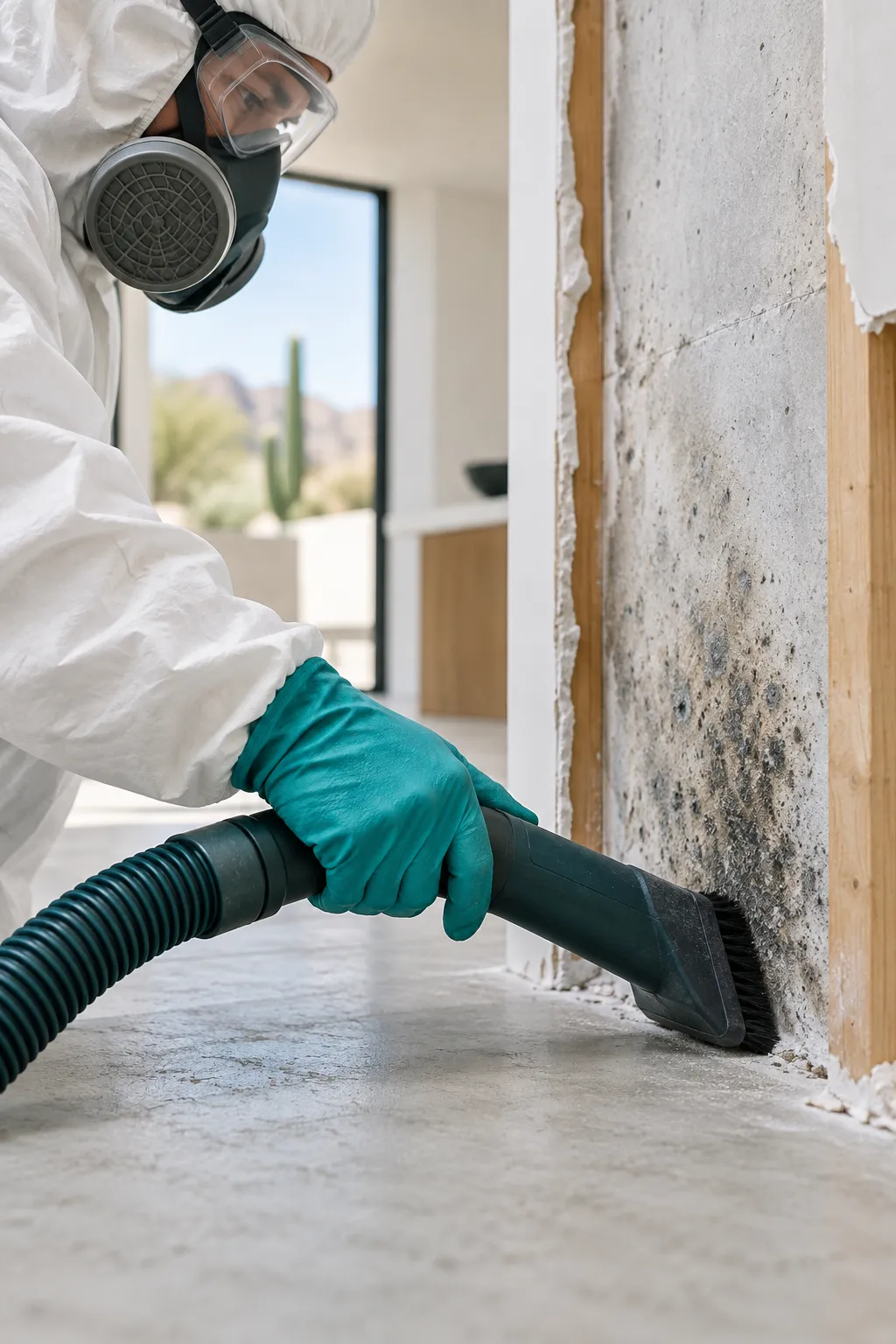
Yes. A cool, damp air handler or a duct lined with dust is a good surface for mold, and spores are already present in indoor and outdoor air, so any part of a system that stays wet long enough can grow it. Growth does not need wood or paper; dust plus moisture is enough. The EPA is direct about what to do next: if you know or suspect that your heating and cooling system is contaminated, do not run it, because it could spread mold throughout the building (EPA, Mold Cleanup in Your Home (opens in a new tab)). In Huntersville, an air handler dripping into a clogged condensate line, a drain pan that never fully dries, or a system shut off for a closed-up summer all keep the same surfaces damp for weeks. That is when growth takes hold, and cleaning alone will not fix it if the moisture source stays wet. The water problem comes first; surfaces that are already contaminated get cleaned or removed.
§ 06 / 11
What are the signs of mold in an AC system or ducts?
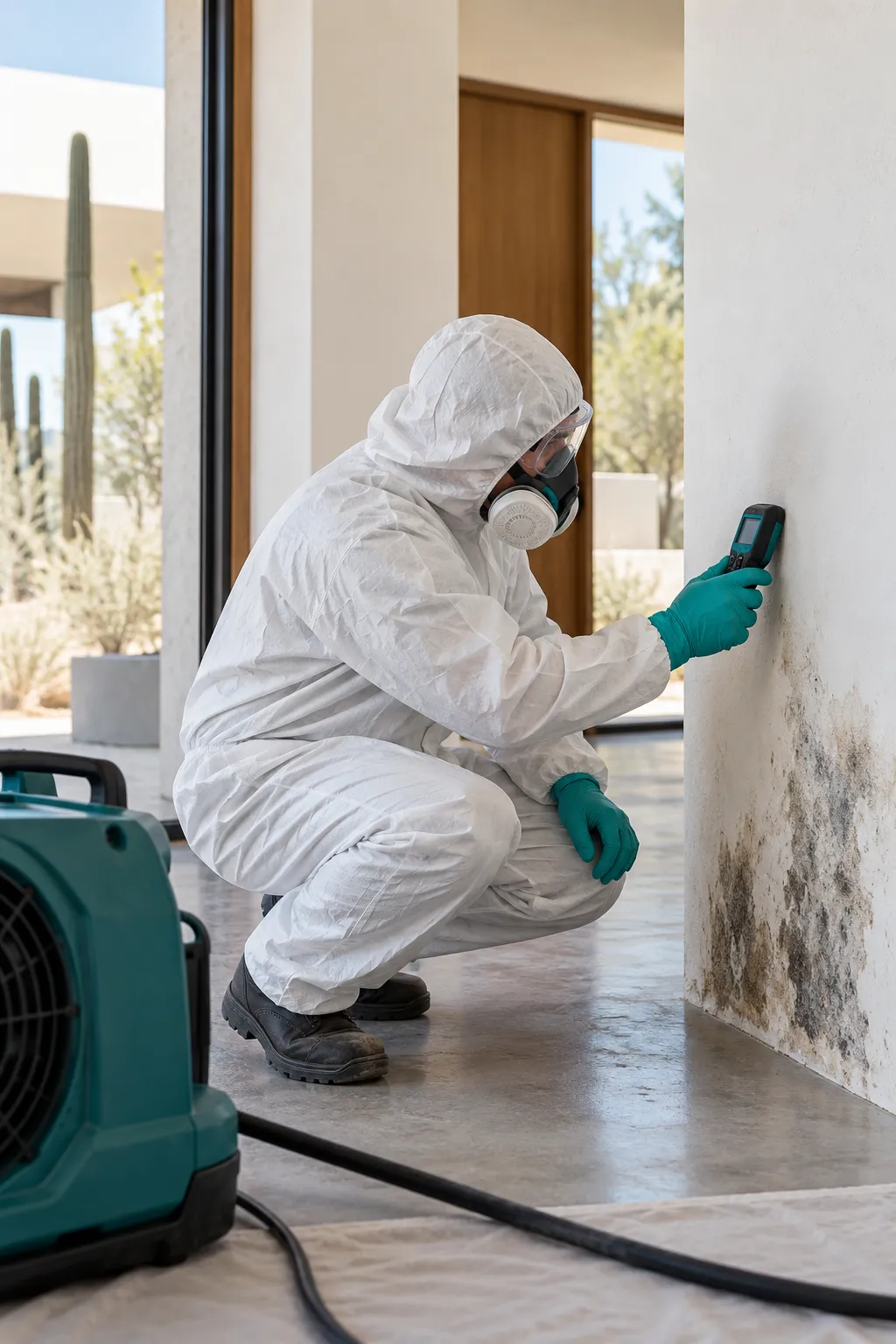
The most common sign is a musty, earthy smell that gets stronger when the air conditioner runs. You might also notice that allergy-like symptoms ease when you are away from home and return when you are inside again, dark speckling or staining at the air handler or around the drain pan, or water standing under the unit. Staining along a duct seam or speckling on the blower wheel is easy to miss until the unit is opened for service. The EPA notes that mold can cause allergic reactions in sensitive people (EPA, Brief Guide to Mold, Moisture and Your Home (opens in a new tab)); if you think mold is making someone sick, talk to a doctor. In larger Huntersville homes with several air handlers, check every unit, including the ones in closets, garages and attics that you rarely open, because a second unit can be the source even when the smell seems to come from one room. If any of that looks familiar, call (980) 250-4059 and have the system checked.
§ 07 / 11
How does mold get into a Huntersville AC system?
Moisture problems in Huntersville can come from plumbing leaks, AC condensate, storm runoff or persistent indoor humidity. A closed room or a concealed wall cavity may remain damp even after the visible surface feels dry. Check the water source, document the affected area and arrange a moisture assessment when the cause is unclear. The EPA recommends drying water-damaged materials within 24 to 48 hours. Keep drainage working, monitor indoor humidity and inspect a previously wet area after the next rain. The condition of the individual home matters more than a neighborhood average.
Line open now
A musty smell when the AC runs?
Describe what you see or smell. You do not need to diagnose anything yourself.
§ 08 / 11
What does HVAC mold removal involve?
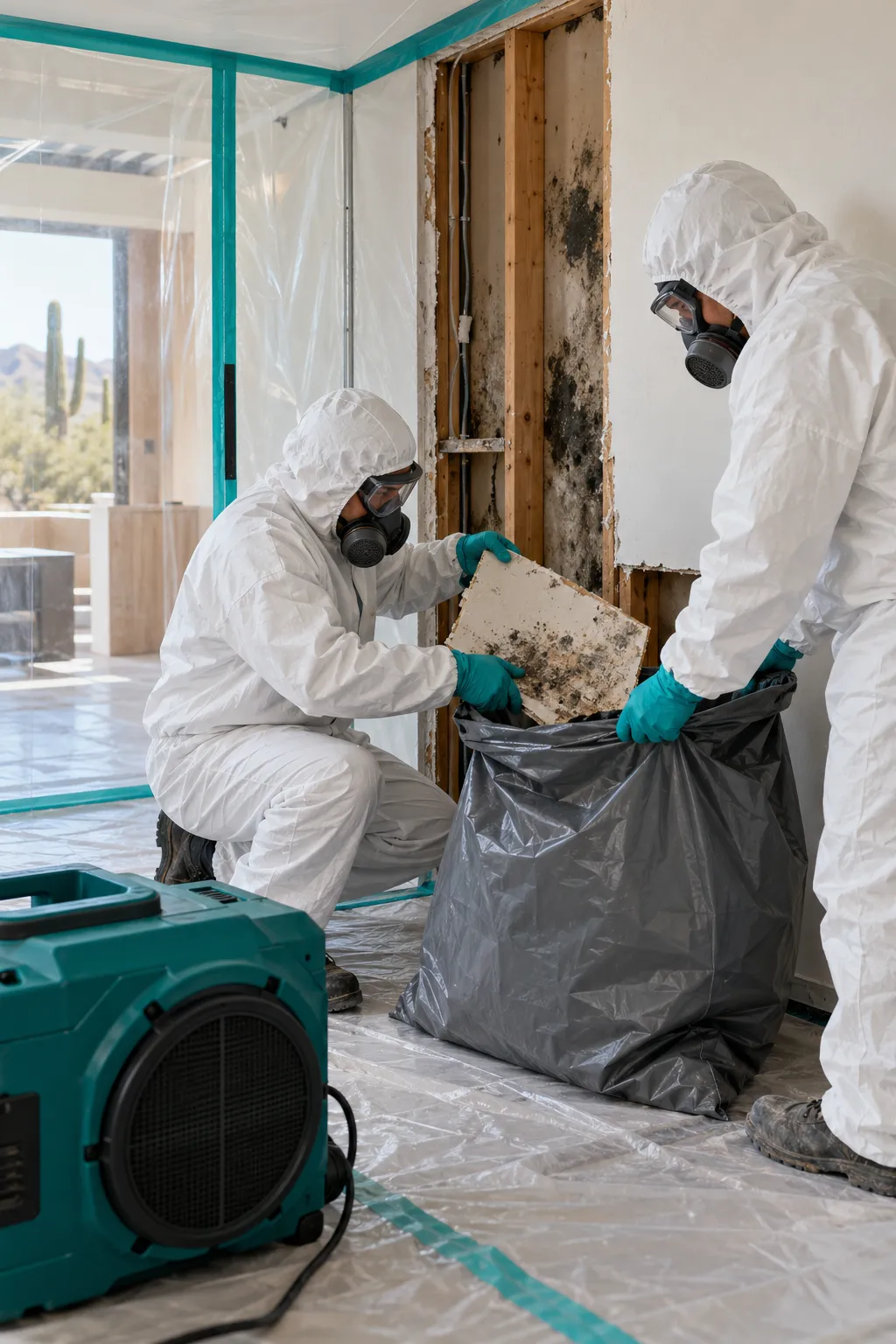
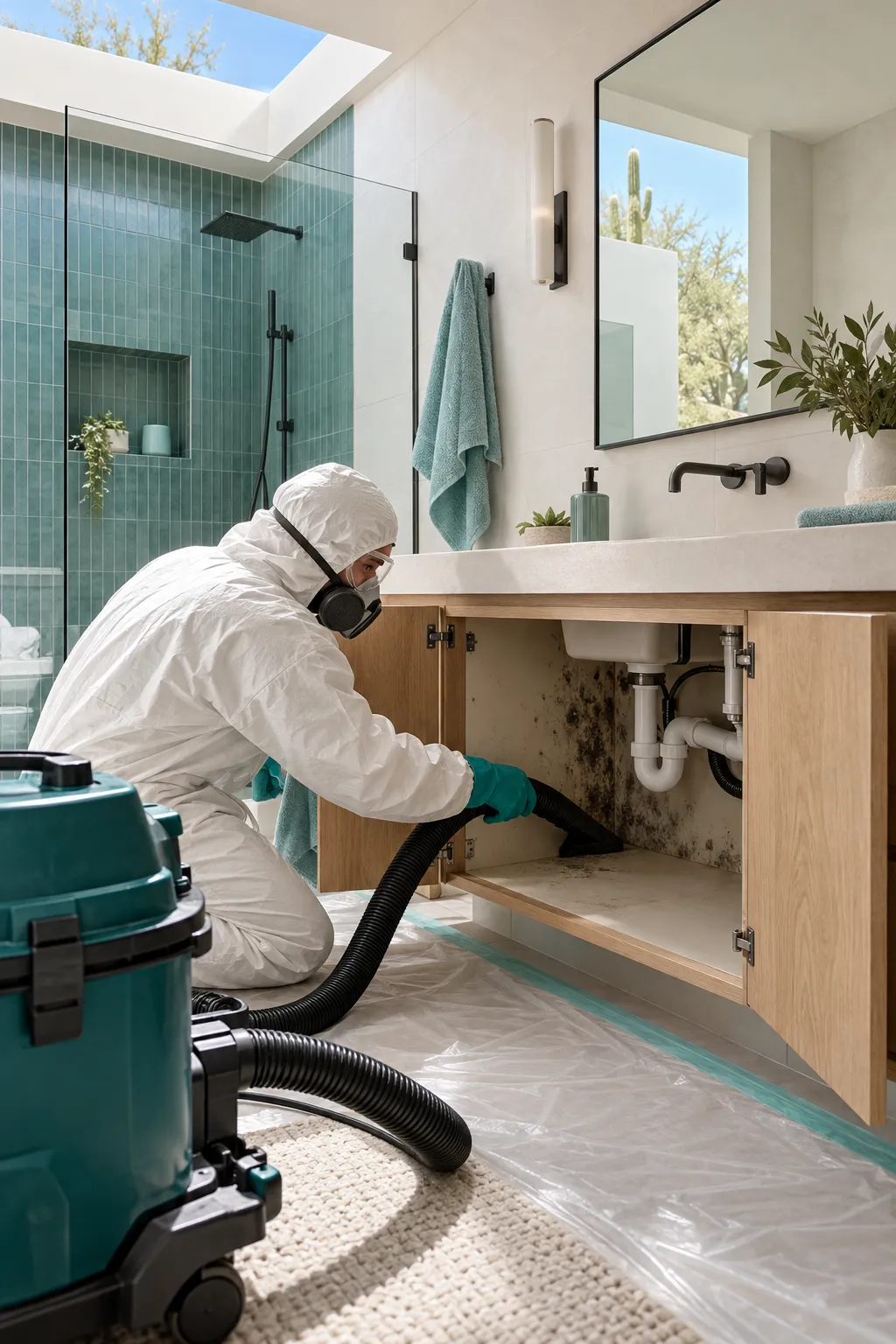
HVAC mold removal starts with containment, so spores do not travel through the house while work is going on. Then the air handler is opened up and the blower, coil area, drain pan and accessible ductwork are cleaned, with HEPA vacuuming and air scrubbing used to capture spores, and everything is dried before the system is closed back up. The work should also confirm where the moisture came from, because a cleaned system that still gets wet will grow mold again. Sometimes sections cannot be cleaned in place: when duct board or insulated flex duct is soaked and contaminated, the affected sections are removed and replaced, because the EPA's position is that mold has to be removed, not just killed (EPA, Brief Guide to Mold, Moisture and Your Home (opens in a new tab)). Any mechanical fix, like a failed blower or a condensate line that needs re-routing, is an HVAC technician's job.
§ 09 / 11
How do you prevent mold in an AC system?
The EPA's basic rule is that controlling moisture controls mold, so prevention comes down to keeping water moving and surfaces dry (EPA, Brief Guide to Mold, Moisture and Your Home (opens in a new tab)). Change the air filter on schedule; a clogged filter strains the system and leaves more dust in the cabinet, where it holds water. Clear the condensate line and flush the drain pan before summer, and pour a pitcher of water through the line to confirm it drains fast. A pan treatment or tablet helps keep the pan from growing film between service visits. After wet weather, check the pan and the cabinet floor for standing water or staining. If a unit sits off for months, run it and look for drips before you close the house up again. Check the pan every few weeks in summer, and look under the unit after any storm. Keep the area around the air handler clear, so a leak shows up as a stain instead of hiding behind stored boxes.
§ 10 / 115 questions
Questions people ask
01Can a moldy AC make the whole house smell musty?
Yes. When a contaminated system runs, air moves through the air handler and ductwork into every room it serves, so a musty smell at the vents usually points back at the system, not the room. The EPA advises against running a system you know or suspect is contaminated, because it could spread mold throughout the building. If a single room smells musty, start at its supply register.
02Do the ducts have to be replaced, or can they be cleaned?
That depends on the material and how far the growth has spread. Metal ductwork can often be cleaned where it is, while soaked duct board or insulated flex duct may have to be removed and replaced. The on-site assessment settles which sections come out and which are cleaned in place.
03How long does HVAC mold removal take?
The schedule depends on the size of the system, how many air handlers are involved and how much material has to come out. A single contaminated air handler is a different job from a home with 3 units and long duct runs. The scope written after the assessment sets the days on site. Expect the contained area to be out of use while the work runs.
04Will homeowners insurance pay for HVAC mold removal?
Sometimes, depending on what caused the moisture and on your policy, and your insurer decides. Many policies treat a sudden discharge from a plumbing system differently from long-term seepage: Triple-I (opens in a new tab) notes that an HO-3 policy covers accidental discharge of water from a plumbing system and treats seepage as a maintenance issue that is not covered. Our article on mold and homeowners insurance walks through how these claims usually work. Keep dated photos of the damage before cleanup starts. Photos are useful whether a claim is filed now or later.
05Can I just run the AC and hope the system dries out?
No. Running a contaminated system can spread spores through the house, and the EPA says not to run a system you know or suspect is contaminated. Drying will not fix a source problem either: if the condensate line is still clogged or the pan still holds water, the surfaces stay wet and growth comes back. Have the pan and the line checked before the system runs again.
§ 11 / 11Keep reading
- Mold remediation: containment, removal and drying for rooms, attics and whole homes, with the moisture source identified and addressed first.
- Mold inspection and testing: air and surface samples plus a moisture walkthrough to confirm what is growing and where.
- Services: all of the mold services available across Huntersville and the nearby towns.
- North Huntersville: large homes with several AC units and air handlers, often tucked into attics and closets.
- Pricing: published ranges for inspections, small areas, attic work, HVAC systems and larger jobs.