
Does Homeowners Insurance Cover Mold in North Carolina?
Mold coverage in North Carolina depends on how the water got in and on the wording of your policy. If water is running right now, call (980) 250-4059 and deal with the paperwork second.
Published
Get a call back
Fill in the form or call (980) 250-4059. Calls are answered day and night.
§ 01 / 08
Does homeowners insurance cover mold?
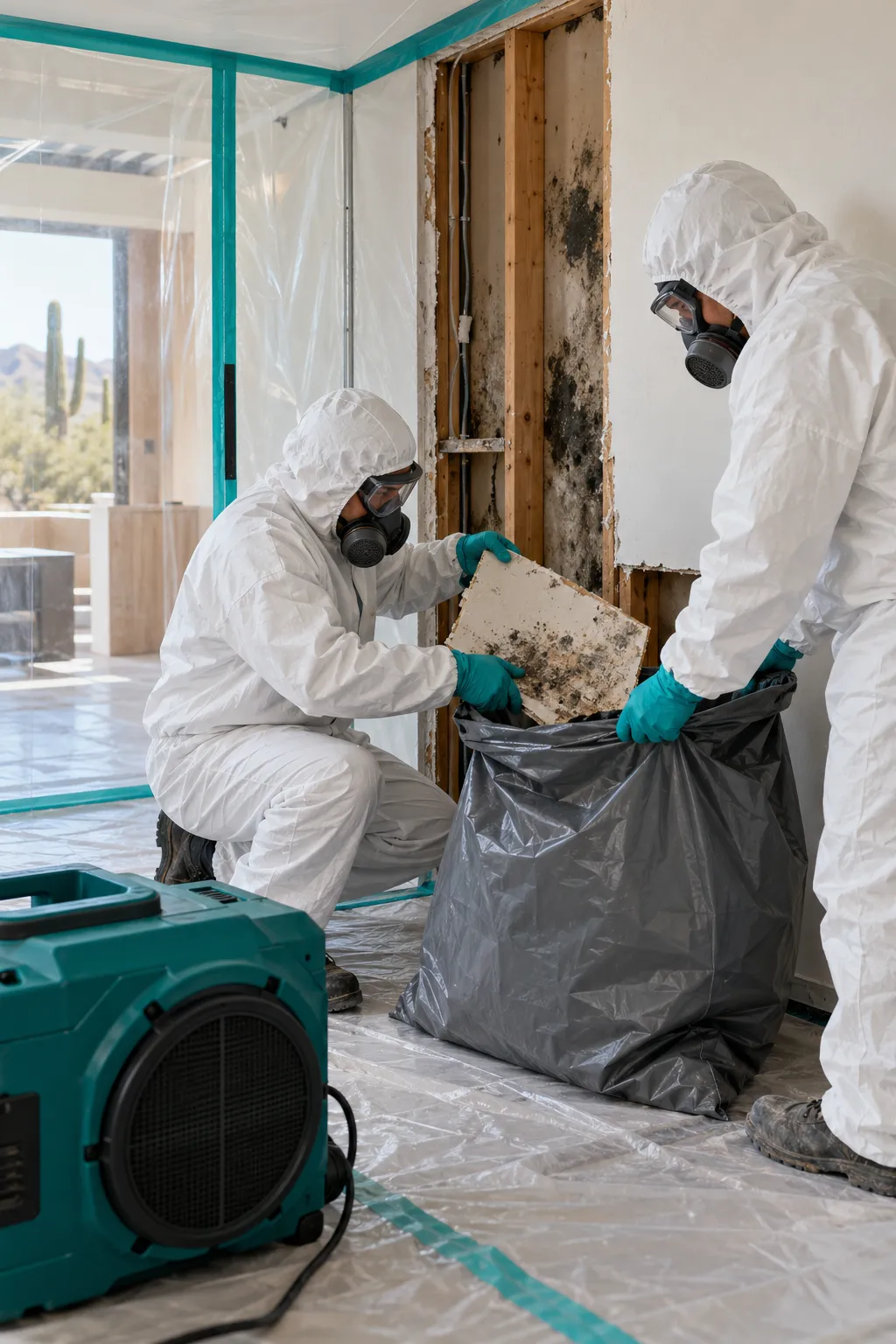
Sometimes, and usually only as a side effect of a water event the policy already covers. There is no standard line item called mold coverage. What an adjuster looks at is how the water got in and how long it sat before anyone acted on it.
A sudden, accidental leak from a plumbing system is the classic covered event, and mold that follows from it is often handled as part of the same claim, up to whatever limit the policy sets. Long-term seepage, a leak you knew about and left alone, and water from outside the house all read differently.
Your insurer decides. The answer for your home lives in your policy and in a call to your carrier.
§ 02 / 08
When does a homeowners policy cover water damage?
Triple-I's plain rule of thumb (opens in a new tab): an HO-3 homeowners policy covers accidental discharge of water from a plumbing system. A supply line that lets go, a burst pipe, a failed fitting behind a wall: those are the events this coverage is built around.
2 conditions tend to come with it:
- The escape was sudden and accidental. Policy language centers on water that arrived without warning, not water that has been showing up for months.
- Someone acted promptly. Shutting the water off, reporting it and drying the structure within the EPA's 24 to 48 hour window is what keeps a water claim from growing into a mold claim.
Your carrier decides whether a specific loss qualifies. Call them as soon as the water is stopped.
§ 03 / 08
When does insurance not cover mold?
Seepage is a common exclusion. Triple-I notes that water seeping in from the ground is excluded and is viewed as a maintenance issue. Chronic dampness and leaks that were clearly running for a while can be read the same way.
Maintenance neglect is the second. A water heater that has dripped for a year, a roof that never got fixed, a shutoff valve nobody replaced: insurers read those as problems the owner had time to handle.
Flood is the third, and it surprises many people. Flood damage is excluded (opens in a new tab) from standard homeowners policies, and a separate policy, usually through the NFIP, is what covers it.
In each case, mold can get folded into whatever exclusion swallowed the water in the first place.

§ 04 / 08
Where does mold sit in a typical policy?
Quietly, and often with a cap. Many policies limit what they will pay for mold remediation, or exclude it unless it follows a covered water event, and the wording changes from carrier to carrier and policy to policy.
Do 2 things:
- Tell your insurer early. Mold found late reads differently than mold reported while the drywall is still open. If the water event is already reported, add the mold finding to that claim.
- Ask 2 questions in writing: what is the mold limit on this policy, and does that limit sit inside the water damage coverage or beside it. The answers change what you pay out of pocket.
Your carrier is the one who applies those limits to your loss.
Line open now
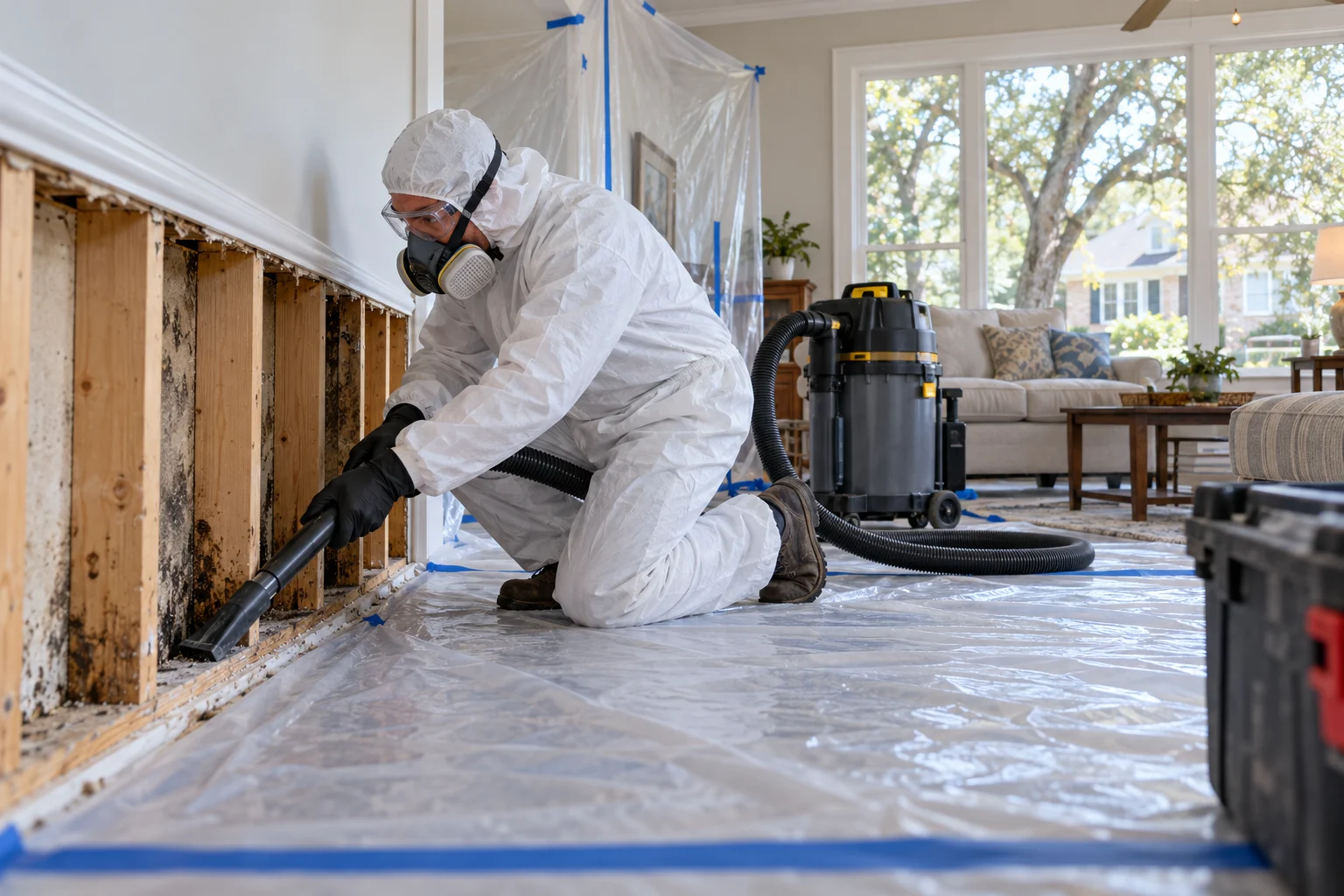
Mold growing right now?
Describe what you see or smell. You do not need to diagnose anything yourself.
§ 05 / 08
Is sewer backup covered?
Usually not. Triple-I notes that a sewer backup is generally not covered under a typical homeowners policy, and flood insurance does not cover it either. What adds it is a rider or endorsement you buy on purpose, on top of the base policy.
That matters for mold, because backup water is contaminated. More material has to be removed instead of dried, the cleaning protocol is heavier, and the job costs more than the same square footage of clean water. Old sewer laterals and floor drains are common places for it to start.
Ask your agent before anything happens: does this policy cover sewer backup, and what would the rider cost. The answer is the difference between a covered loss and a bill you own.
§ 06 / 08
Is summer storm floodwater covered?
Generally no, and this is the local version of the flood exclusion. Rain that pools in a yard, or water that crosses a drainage channel into a neighborhood, is floodwater. FloodSmart (opens in a new tab) is direct that most homeowners insurance does not cover flood damage, and flood insurance is a separate policy, usually through the NFIP.
Wet weather can occur throughout the year, and Huntersville area storms can drop 1 to 2 inches while other parts of the Valley stay nearly dry. A home near a drainage channel or on a low lot lives with that exposure every summer, whether or not it has flooded before.
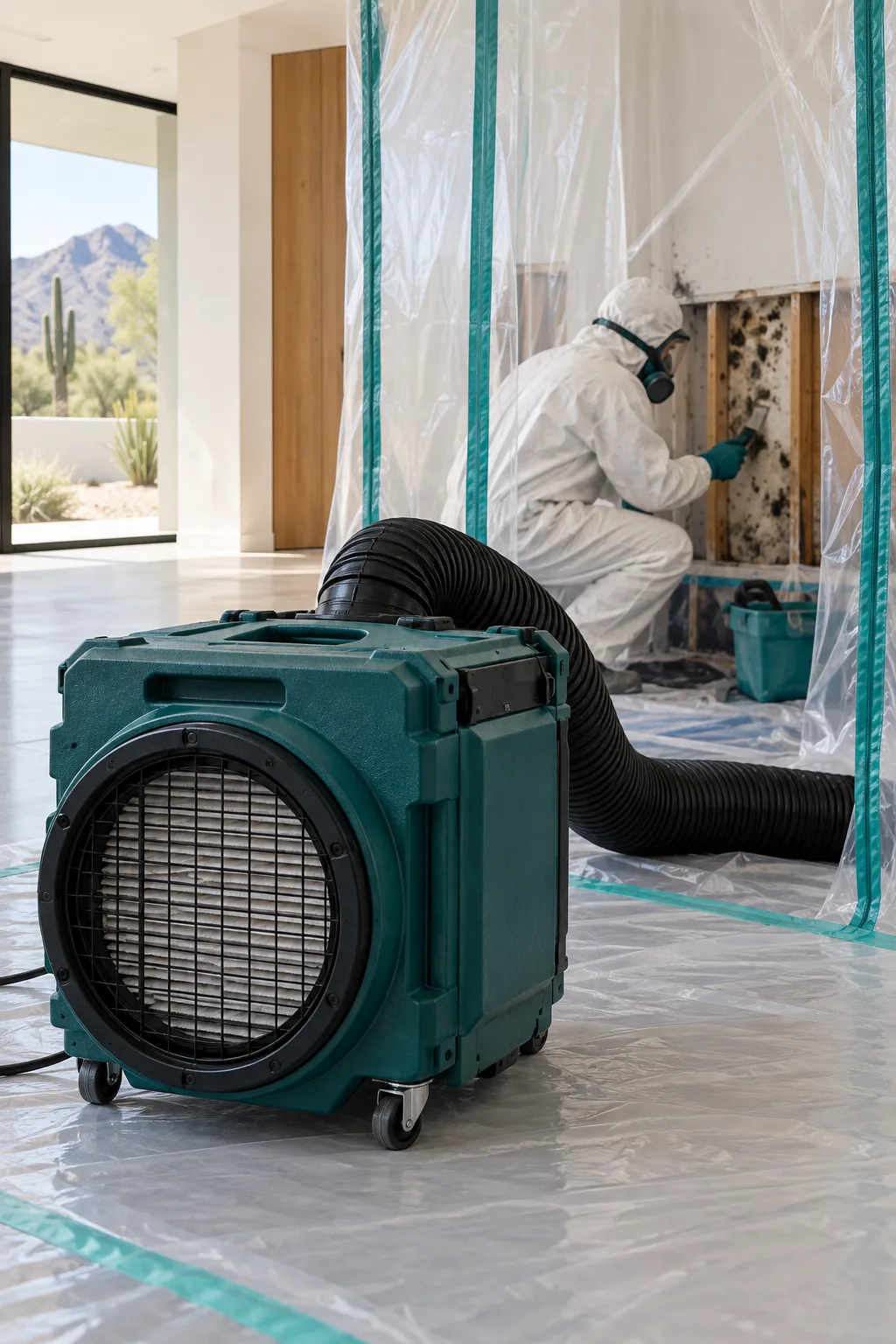
When floodwater gets inside, mold follows fast, and the cleanup is rarely a routine one.
§ 07 / 084 questions
Questions people ask
01What should I document for a claim?
Photograph everything before anything moves: wide shots of the room, close shots of the water line and any growth. Keep the moisture readings, equipment logs, the plumber's invoice and a dated note.
02Will my policy pay to remove the mold?
It depends on the policy and on how the water got in. Mold that follows a sudden, covered water event is often part of that claim. Your insurer decides, so ask your adjuster for the answer in writing.
03What if I did not know the leak was there?
Sudden and accidental leaks are the ones policies are built around; a leak that quietly ran for months is read differently. Note when you first saw a stain or smelled something, because that date comes up.
04Does flood insurance cover mold?
Flood policies respond to flood damage, and cleanup after floodwater commonly involves mold. Whether the mold is part of the flood claim depends on the policy and the cause, and your insurer decides.
§ 08 / 08Keep reading