
Mold Removal Cost in Huntersville: What Drives the Price
Mold removal cost in Huntersville is set by the job, so similar-looking stains can get different quotes. Published ranges run from $520 to $31,000, and the size, the location and what has to come out move a quote up or down. For your own home, call (980) 250-4059.
Published
Get a call back
Fill in the form or call (980) 250-4059. Calls are answered day and night.
§ 01 / 07
How much does mold removal cost in Huntersville?
There is no single price for mold removal in Huntersville: where the mold is matters more than how the stain looks in a photo. The ranges below come from reference-market data sources and national cost guides.
Huntersville market ranges
| Job | Published range | Source name |
|---|---|---|
| Small surface area, under 10 sq ft | $520 to $1,550 | Masters' Guild (reference-market, 2026) |
| Bathroom or single-room remediation | $520 to $1,050 | Masters' Guild (reference-market, 2026) |
| Attic remediation | $1,050 to $4,150 | Masters' Guild (reference-market, 2026) |
| Whole-home or post-flood remediation | $10,300 to $31,000 | Masters' Guild (reference-market, 2026) |
| Typical remediation job | $1,100 to $3,400 | MoldGuide (Huntersville) |
| Mold inspection | $450 to $800, average about $500 (2,500 sq ft home, 2 samples, lab testing) | Fixr |
National guide ranges
| Job | Published range | Source name |
|---|---|---|
| Typical mold remediation | $1,200 to $3,750, average $2,300 | This Old House (from Angi data) |
| Mold removal, per square foot | $10 to $25 | This Old House |
| Small area | $500 to $1,500 | This Old House |
| Bathroom | $500 to $1,000 | This Old House |
| Attic | $1,000 to $4,000 | This Old House |
| HVAC system | $3,000 to $10,000 | This Old House |
| Whole house | $10,000 to $30,000 | This Old House |
| Mold remediation, national | $1,500 to $9,000, average $3,500 | Fixr |
Ranges are published by cost guides and market data sites on their websites (checked October 2026). They are market figures, not a quote. The actual price is set after an on-site assessment, and it depends on the affected area, where it is, and what has to come out.
§ 02 / 07
What drives the price up or down?
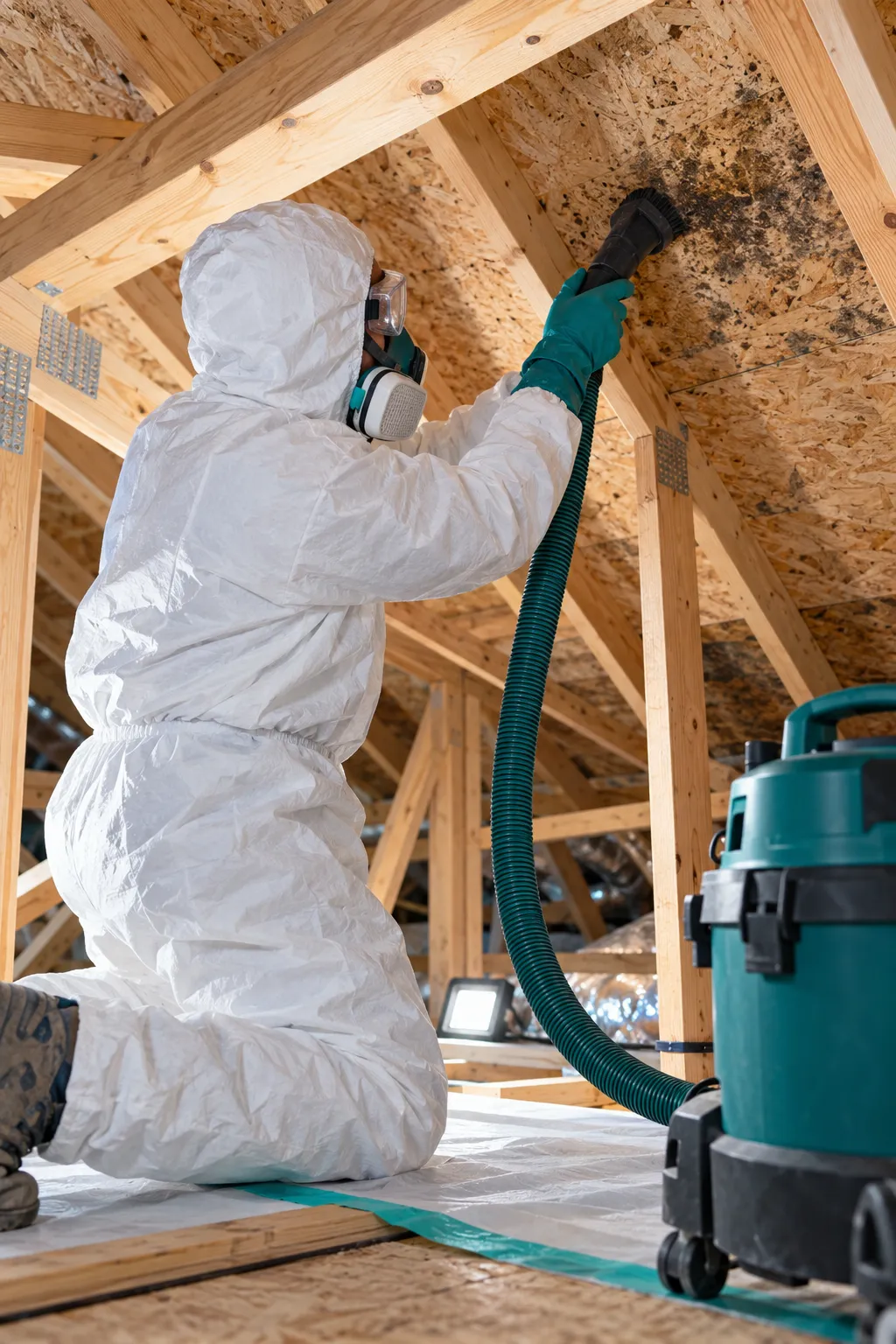
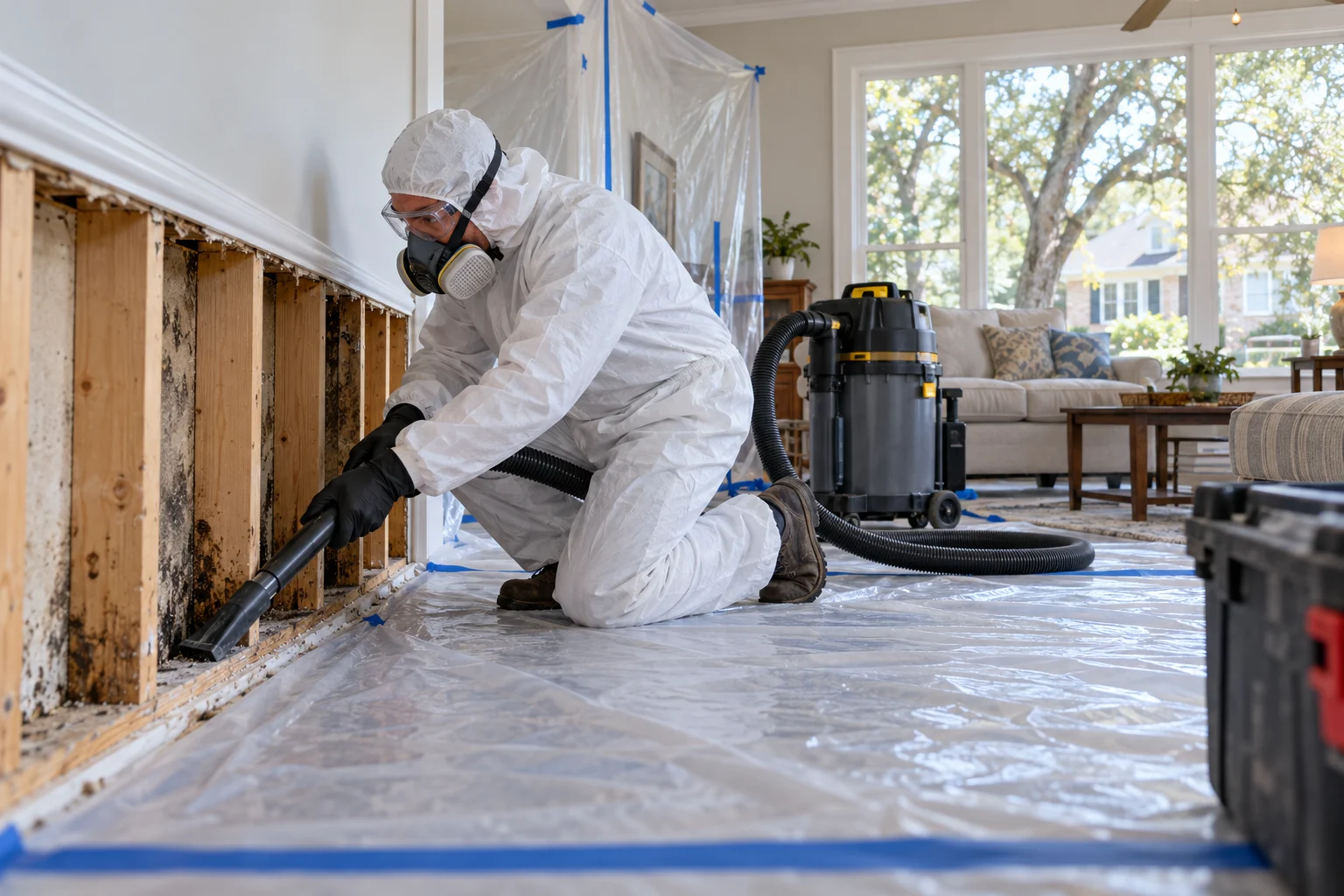
Size and spread matter first. A patch under a bathroom sink is a short job, while mold through a wall cavity or across attic sheathing means bigger containment and more material out. Location matters next: attic and wall-cavity work costs more than an open room; access is harder, insulation and drywall come out, and disposal adds up. Materials matter, too: porous items like carpet and ceiling tiles often cannot be cleaned and have to be thrown away, which the EPA notes for absorbent materials (EPA, Brief Guide to Mold, Moisture and Your Home (opens in a new tab)). Quotes also move with containment zones, equipment and days on site, whether the moisture source repair is included, and rebuild.
§ 03 / 07
What do inspection and testing add?
Inspection and testing are often a separate line item from the removal work, and they are the smallest numbers here. Fixr publishes mold inspection at $450 to $800, with an average of about $500 for a 2,500 square foot home, in a scope that includes 2 samples and lab testing. Testing tells you what is actually growing; a visual walkthrough only shows the surface. The sample count, lab fees and the written report are the parts that vary.
§ 04 / 07
Does insurance help with the cost?
Sometimes, but it is not automatic, and your insurer decides. Most homeowners policies treat a sudden leak from a plumbing system differently from long-term seepage (Triple-I, Am I Covered (opens in a new tab)). For how a claim usually goes, read our article Does homeowners insurance cover mold?.
Line open now
Mold growing right now?
Describe what you see or smell. You do not need to diagnose anything yourself.
§ 05 / 07
Why does waiting cost more?
Because mold grows while the moisture stays, and the bill grows with it. The EPA's guidance is to dry water-damaged areas and items within 24 to 48 hours to prevent mold growth (EPA, Brief Guide to Mold, Moisture and Your Home (opens in a new tab)). Past that window, growth can spread into new materials, and a small repair can become containment, demolition and disposal. A slow leak that runs all summer in a closed-up Huntersville home can leave a small visible stain over a wide damp zone behind the wall, and the repair bill grows while you decide.
§ 06 / 074 questions
Questions people ask
01Why do quotes for the same room differ so much?
Because the scopes are not the same. One scope may clean and seal a surface while another cuts out drywall, removes wet insulation and rebuilds. What is removed versus cleaned, and whether the moisture source repair is included, change the number.
02Can I handle a small mold spot myself?
In most cases, if the moldy area is under about 10 square feet, the EPA says you can handle it yourself; larger areas should go to a professional. A small spot with no moisture behind it is the do-it-yourself case.
03Does the price usually include the leak repair?
Often not. Many remediation scopes cover containment, removal and drying, while the plumbing or HVAC repair is a separate trade and a separate bill.
04Do I need an inspection before remediation?
Not always, but it helps when you want to know the extent or plan a claim. Inspection and testing cost $450 to $800, average about $500, per Fixr, which is small next to a remediation bill and gives you a report.
§ 07 / 07Keep reading
- Mold in Huntersville homes: climate-driven mold problems, from AC drains to summer storm leaks.
- Does homeowners insurance cover mold?: how mold claims usually work and what a policy says.
- Black mold facts: the black mold label and when testing is useful.
- Mold remediation: containment, removal and drying on a typical job.
- Pricing: published ranges for inspections, small areas and larger jobs.
Price ranges are reference-market and national planning examples, not verified Huntersville prices or a quote. Your contractor sets the price after assessing your property.