
Mold Inspection and Testing in Huntersville, NC
You have a musty smell and nothing you can see. Call day or night or send the form, and someone from our team will call you back soon.
Get a call back
Fill in the form or call (980) 250-4059. Calls are answered day and night.
§ 01 / 12
Where the moisture is, in a written report
A mold inspection answers 3 questions: is there growth, where is the moisture feeding it, and how far has it spread. Lab testing is added only when it answers a real question. If you can smell something you cannot see, call (980) 250-4059.
- A whole-house walkthrough, attic first when there is access.
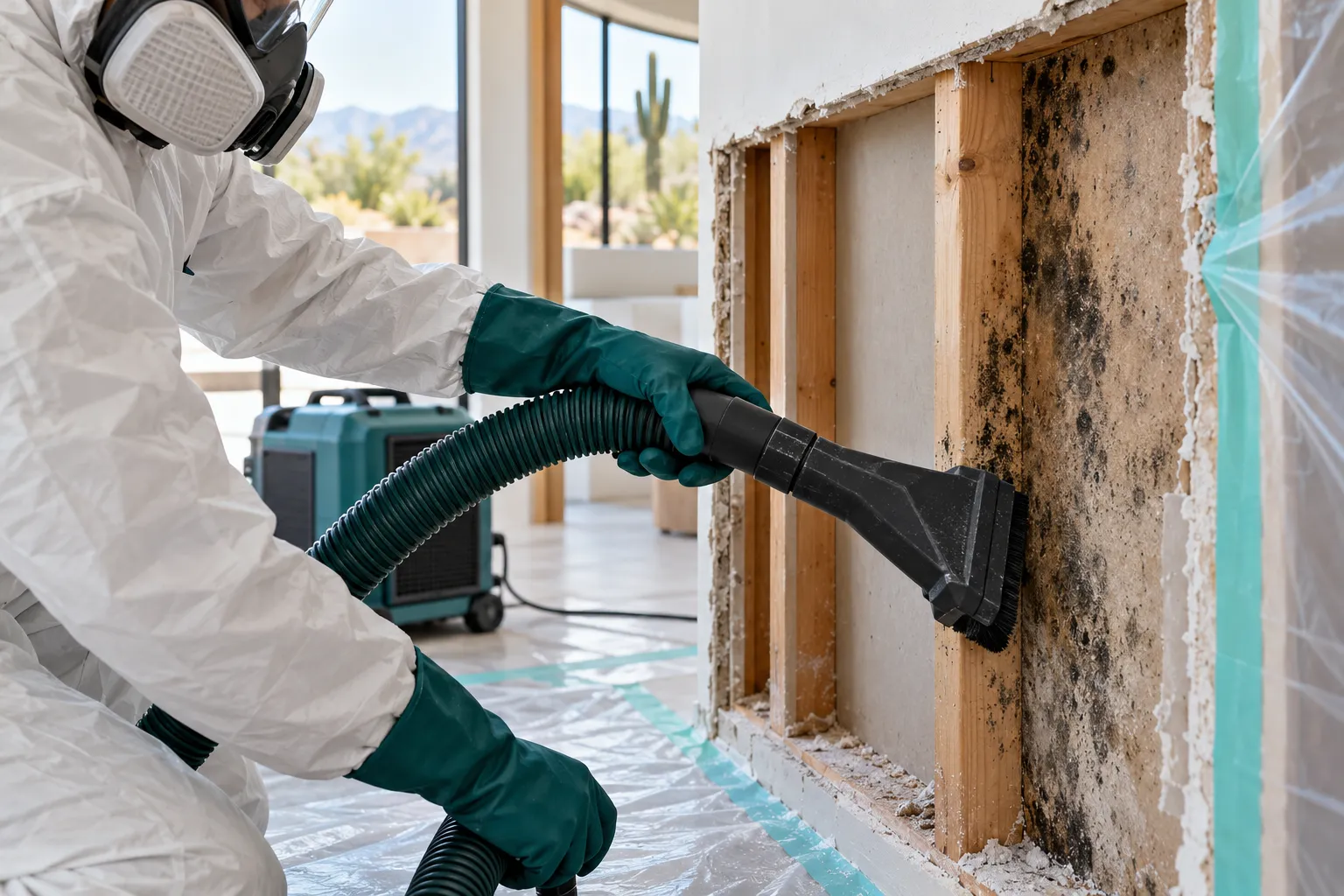
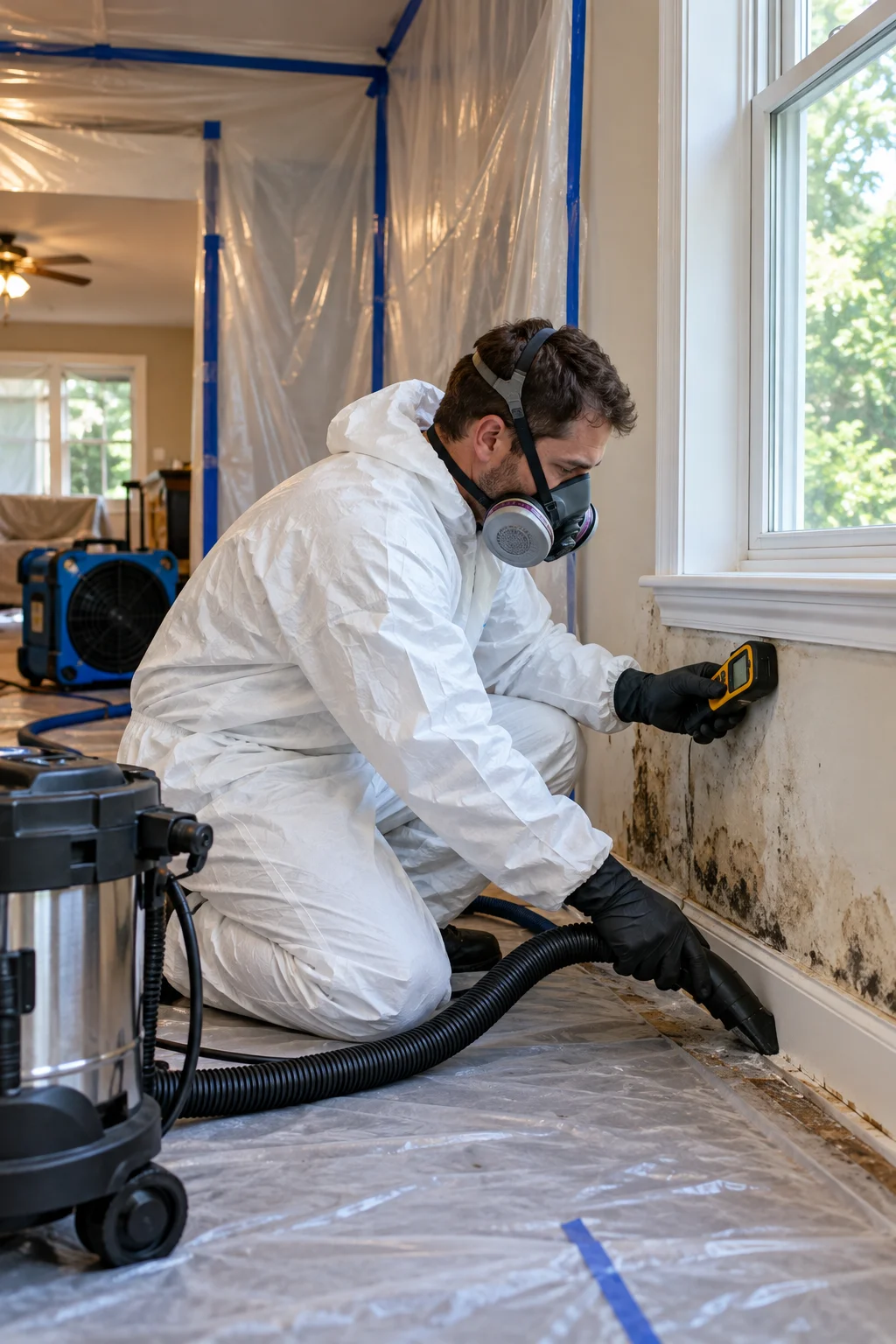
- A moisture meter and a thermal camera check walls, ceilings and floors for hidden water.
- Every reading goes on a moisture map, so wet and dry zones are visible at a glance.
- A written report with photos, readings and a plain-language summary.
- Lab samples when a sale, a doctor or a finished cleanup needs a record.
§ 02 / 126 signs
6 signs you need a mold inspection
Hidden water is the dangerous part: nobody sees it, so it keeps feeding growth. A musty smell with nothing visible is a real finding here, not an overreaction.
- 01
A musty smell and nothing visible
Samples plus moisture readings help pin down the wall, floor or AC chase holding the problem.
- 02
A stain or a past leak
A leak that ran all summer leaves more places to check.
- 03
A room that stays humid
It is one of the first things the inspection asks about.
- 04
A home that sat closed through the summer
Windows shut, air still, nobody to catch a smell. A slow drip can run for weeks before it is found.
- 05
You are buying or selling
A report turns a vague smell into a record both sides can use.
- 06
A doctor asked
A written report gives you something concrete for that conversation.
§ 03 / 123 steps
How a mold inspection works, in 3 steps
- 01
Call or send the form, day or nightTell us what you see or smell, and where.
- 02
Someone from our team calls you backWe go over what you found.
- 03
The walkthrough, moisture readings and a written report followLab samples are added only when they answer a real question.
§ 04 / 12
How much does a mold inspection cost in Huntersville?
Fixr's national cost guide lists mold inspection at $450 to $800, with an average around $500 for a 2,500 sq ft home, and that figure includes 2 samples with lab testing. The price tracks the home: square footage, attic and crawlspace access, how many areas look suspect, and how many samples get taken. Lab fees per sample are the smaller part of the bill; the inspection work itself is the bulk. If the home has been closed up for months, expect extra time in the attic and at every plumbing wall, because a leak that ran all summer leaves more places to check.
Ranges are published by cost guides and market data sites on their websites (checked October 2026). They are market figures, not a quote. The actual price is set after an on-site assessment. The pricing page breaks out how inspections, testing and removal price separately, or call (980) 250-4059 to book a visit.
§ 05 / 12
What is a mold inspection?
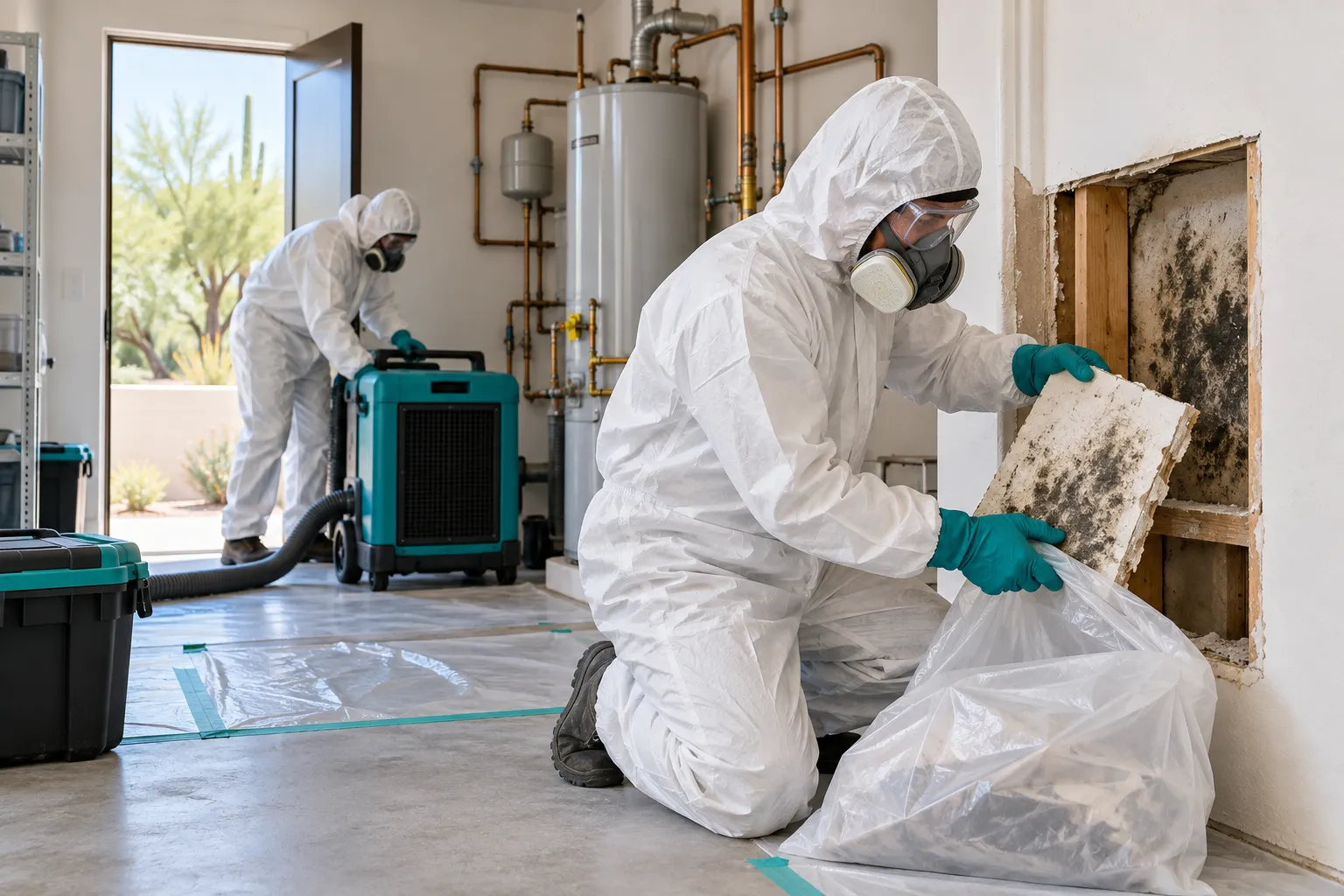
A mold inspection is a whole-house walkthrough that answers 3 questions: is there growth, where is the moisture feeding it, and how far has it spread. It starts with your account of what you noticed and when: a smell, a stain, a past leak, a room that stays humid. Then the walkthrough, attic first when there is access, because roof leaks and AC equipment live up there, followed by AC closets, plumbing walls, under-sink cabinets, the water heater, and exterior walls near irrigation lines. A moisture meter reads water content in drywall, baseboard, framing and flooring at each suspect point, and a thermal camera scans the same areas for temperature patterns that often point to hidden moisture. Everything is marked on a moisture map and written into a report with photos, so the scope is visible on paper. If nothing is found, that is a result too: the report documents the house as dry, which helps if a question comes up later.
§ 06 / 12
What is the difference between a mold inspection and mold testing?
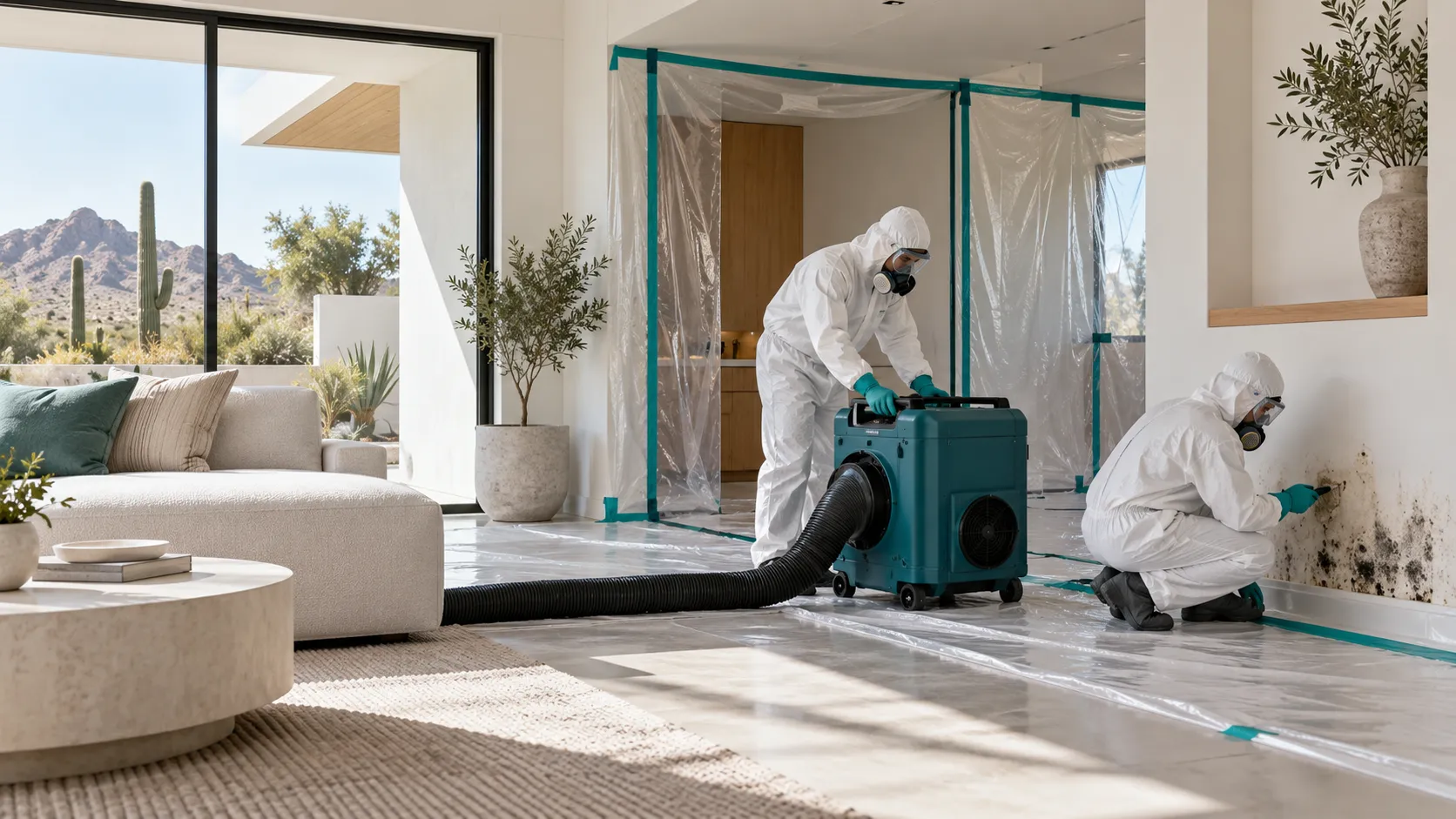
They are separate jobs, and the difference matters when you are deciding what to pay for. An inspection is about the building: where the moisture is, what is wet, and how far growth reaches. Testing is about samples: air samples capture what is floating in a room, and surface samples check what is growing on a specific material. A lab reports counts and species. Air samples are usually taken in the problem room and outside for a baseline.
Then there is the number itself. The EPA (opens in a new tab) does not set a federal limit for airborne mold, so a lab result has no official pass or fail line. A high count in a musty bedroom with no visible growth is useful information; the same count under different conditions might mean little. That is why testing is best read next to the inspection.
§ 07 / 12
When is mold testing worth it?
Testing earns its cost in 4 specific situations.
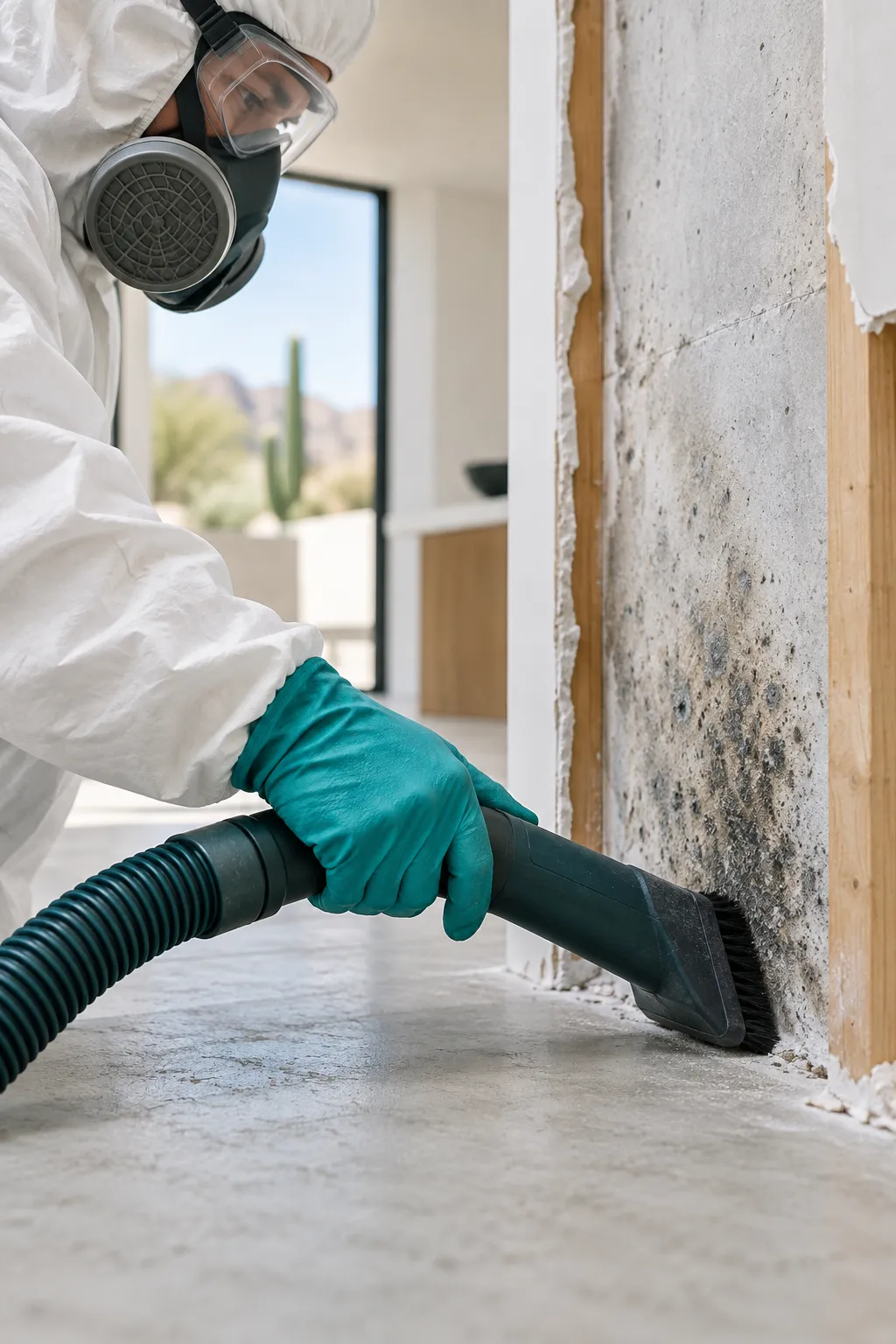
You smell a musty odor but cannot find growth anywhere
Samples plus moisture readings help pin down which wall, floor or HVAC chase is holding the problem.
Real estate
A buyer, seller or agent wants documentation before closing, and a report turns a vague smell into a record both sides can use.
A doctor has asked whether the home has a mold problem
A written report gives you something concrete for that conversation. If you think mold is making someone sick, talk to a doctor.
After a previous cleanup
Testing confirms the work area is back to normal before you rebuild, repaint or move back in.
In each case the test answers a specific question. Sampling with no question attached just produces numbers nobody can act on. If none of these situations fits, an inspection alone is usually the cheaper first step.
Line open now
A musty smell with nothing visible?
Describe what you see or smell. You do not need to diagnose anything yourself.
§ 08 / 12
What happens during a mold inspection?
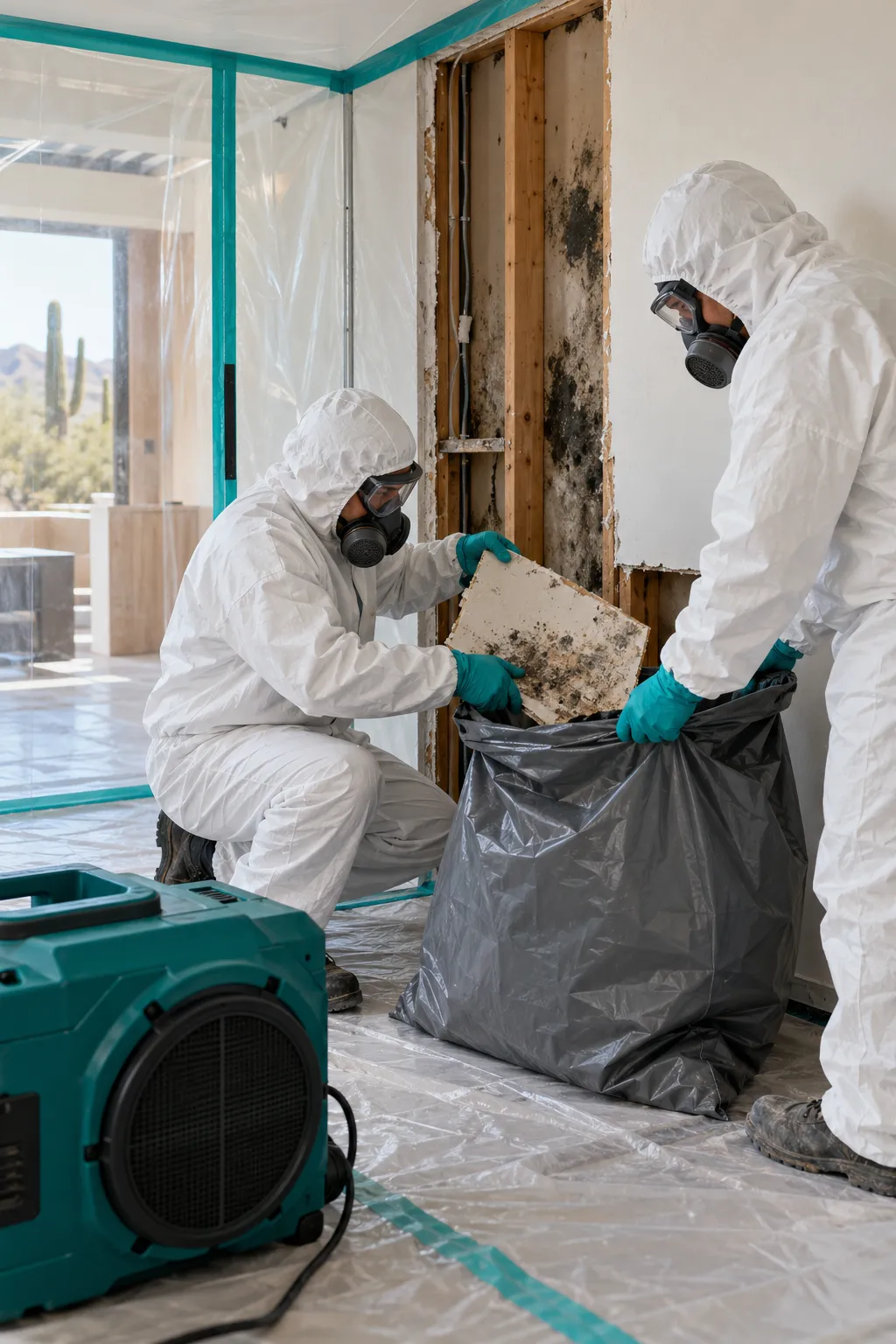
The visit follows the water, room by room. It opens with questions: what did you notice, when did you notice it, is there a stain or a smell, has this room ever leaked or flooded. Then the walkthrough with 2 tools. The moisture meter goes into drywall, baseboards, framing, tile edges and flooring at each suspect point, reading water content directly. The thermal camera scans walls and ceilings for temperature patterns that often reveal moisture behind a surface before it shows a stain. Attics get close attention, because summer storm roof leaks and AC air handlers both live there, and air handler closets, under-sink cabinets, laundry connections, water heater platforms and exterior walls get checked in turn. Every reading is marked on a moisture map, so wet and dry zones are visible at a glance.
At the end you get a written report: photos, readings, the map, and a plain-language summary of what was found and what it means.
§ 09 / 12
Can I test for mold myself?
You can, within limits. Store-bought kits use a petri dish, a swab or a strip, and the result is a count with no moisture inspection attached and no context for where the sample sat. Because the EPA does not set a federal limit for airborne mold, a kit result has no official pass or fail line either. And mold spores are everywhere, so a kit that confirms spores exist has proven very little on its own. A kit also cannot answer the question that matters: where is the water.
Do it yourself makes sense for small, visible growth on hard surfaces, once you have found and fixed the water source. The EPA's cleanup guidance (opens in a new tab) puts the line at about 10 square feet: under about 10 square feet, in most cases you can handle it yourself. Larger areas, porous materials and hidden moisture call for professional help.
§ 10 / 12
Why do Huntersville homes hide moisture?
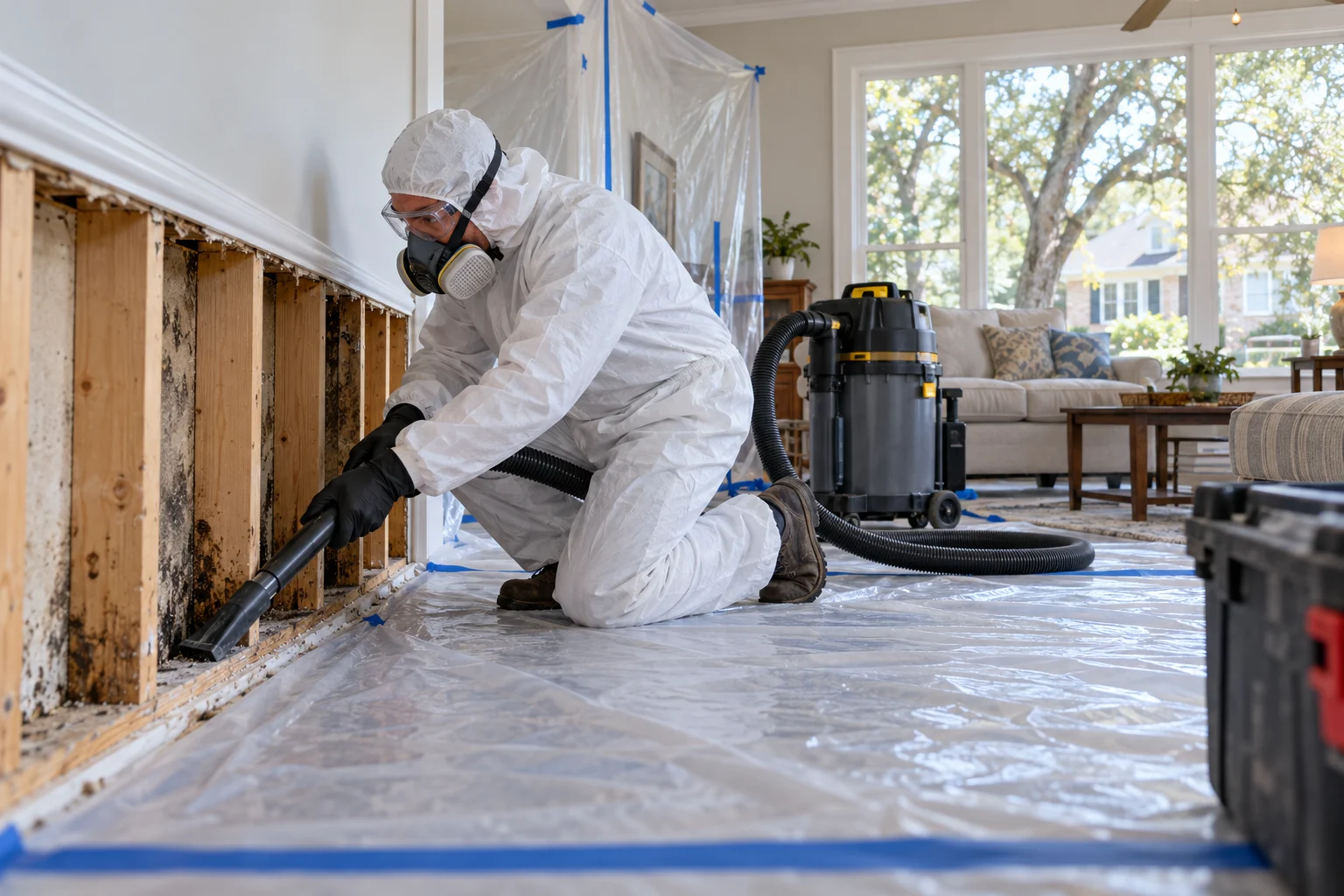
In Huntersville, roof leaks, blocked drainage and AC condensate can leave attic materials damp. Inspect flashing, roof penetrations and the insulation below a new ceiling stain. Wind-driven rain may reach a gap that does not leak in light weather. A moisture reading helps distinguish an old mark from an active leak. Fix the water source before removing damaged materials, and inspect the same location again after rain. Keep gutters and downspouts clear and have a qualified contractor assess roof repairs and safe attic access. For current weather hazards, consult the National Weather Service.
That is why a musty smell with nothing visible is a real finding here, not an overreaction.
§ 11 / 125 questions
Questions people ask
01How long does a mold inspection take?
It is a single visit in most cases. The time depends on the size of the home and how much attic or crawlspace access there is; larger properties with several suspect areas take longer. The written report comes after the visit.
02Do I need testing if I can already see mold?
Often not. Visible growth plus moisture readings already tell the story, and cleanup can be scoped from that. Testing adds value when you need documentation, such as a real estate transaction, an insurance file or a question from a doctor, or when you need to confirm a work area is clean after removal.
03Will the inspection tell me what the removal will cost?
It gives you the scope that a price is built on: the affected area, the materials involved, the access, and whether testing is needed. A removal price still comes after that assessment. Treat the inspection report as the input, not the quote.
04Can testing tell me whether my home is safe?
No test can promise that. There is no federal limit for airborne mold and no official pass or fail line, so a report is evidence, not a verdict. It says what was in the air or on a surface on the day of sampling, and the inspection explains where the moisture is and what to do next.
05Are attics and HVAC systems included?
The walkthrough includes them when there is access, and that is often where the source sits. Sampling those spaces is a separate call based on what the inspection finds. If the attic smells musty or an air handler pan has been wet, sampling is usually worth it.
§ 12 / 12Keep reading
- All mold services: the full list, from inspection to attic and HVAC work.
- Mold remediation: how a full removal job runs, step by step.
- Attic mold removal: why attics here get mold and how the work is done.
- HVAC mold removal: mold in air handlers, coils and ductwork.
- Pricing: published ranges for inspections, testing and removal.