
Mold vs Efflorescence in Huntersville, NC
Efflorescence is salt, not fungus. Mold is alive. The white crust on a Huntersville block wall or slab edge is usually minerals left behind by water moving through masonry, and it does not need remediation.
Get a call back
Fill in the form or call (980) 250-4059. Calls are answered day and night.
§ 01 / 08
The short answer
Efflorescence is a white, powdery mineral deposit that forms when water moves through concrete or masonry and evaporates, leaving dissolved salts behind. It crumbles when dry, dissolves in a drop of water, and has no smell. Mold is organic growth that feeds on paper, wood, or dust, spreads in fuzzy patches, and smells musty. One drop of water tells them apart in seconds.
Which one you are looking at depends on the wall and where the water is coming from, and the answer changes what you should pay for.
§ 02 / 08
Mold: what it actually is
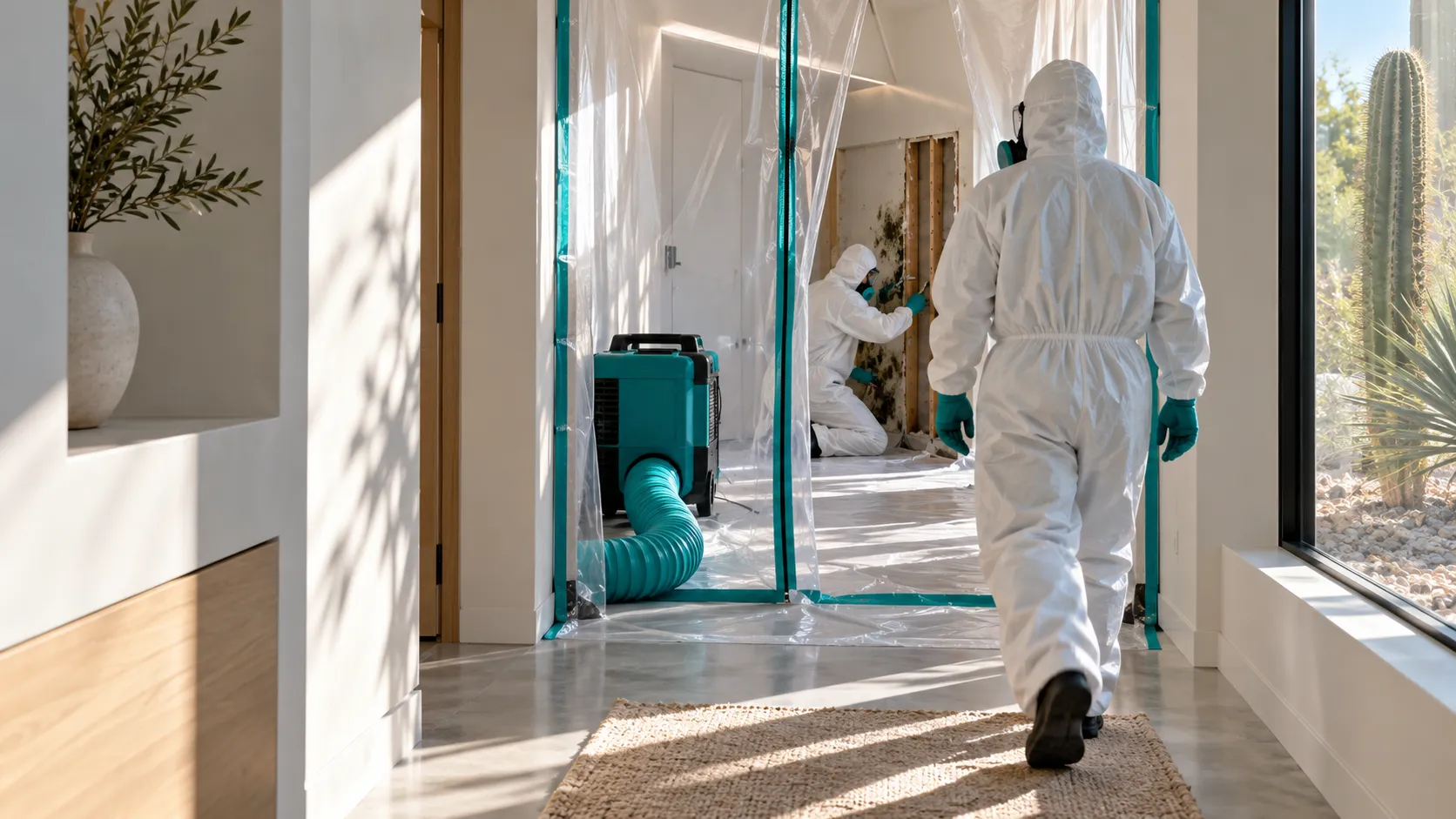
Mold is a living colony. It needs water and food, and in a house the food is the paper face of drywall, wood framing, or the dust film on a surface. The colony grows in patches that look fuzzy, slimy, or sooty, in blacks, greens, browns, and grays. It smells, especially in a closed room, and it sends threads into whatever it is feeding on.
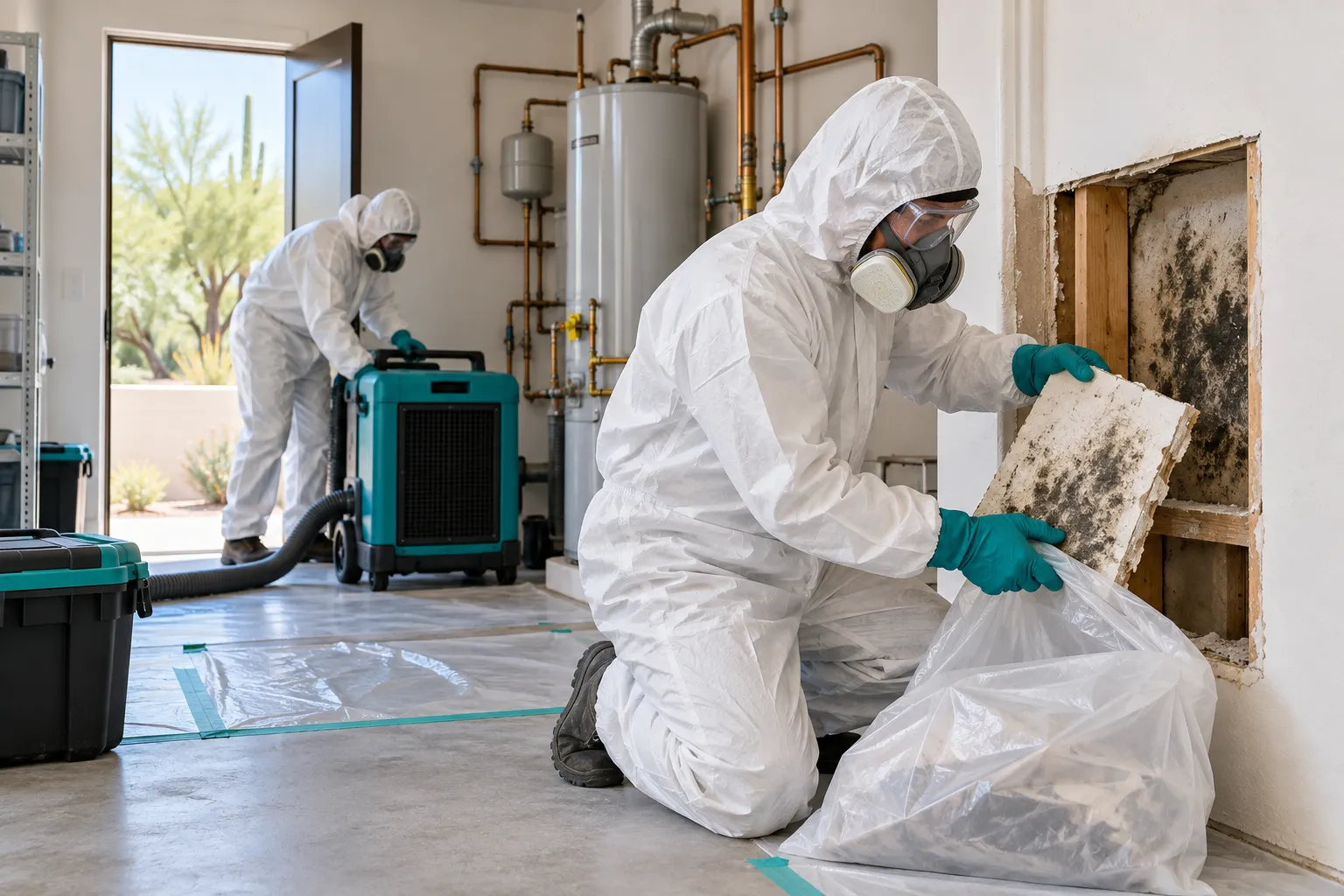
Mold grows where water has been sitting, not just passing through. A slow leak, a condensate line dripping in a ceiling, a summer storm leak that ponds on a flat roof. The visible patch is the fruiting body of an organism that runs deeper into the material, which is why scrubbing the surface does not end the problem. If the patch is on drywall and there is water above it, you are in removal vs remediation territory.
That distinction matters more in Huntersville than in most places, because the water that feeds mold here usually arrives while nobody is looking. The mold inspection and testing page covers how a source hunt finds it.
§ 03 / 08
Efflorescence: what it actually is
Efflorescence is chemistry, not biology. Water picks up salts as it moves through concrete, block, brick, or mortar. When the water reaches a surface and evaporates, the salts stay behind as a white or grayish crystalline crust. The crust can be powdery or feathery, and it shows up in bands and streaks that follow where the water exits the wall.
The water itself is the real finding. Efflorescence means moisture is moving through the masonry, and in the Valley the usual drivers are summer storm rain against a wall, irrigation against a stem wall, or ground water wicking up a slab edge. Hard water makes the deposit heavier, because the water starts with more dissolved minerals. The crust is not a health issue and it does not spread like mold, but it keeps coming back until the water path changes. No spores, no smell, no food. Just salt.
§ 04 / 08
Where mold fails here
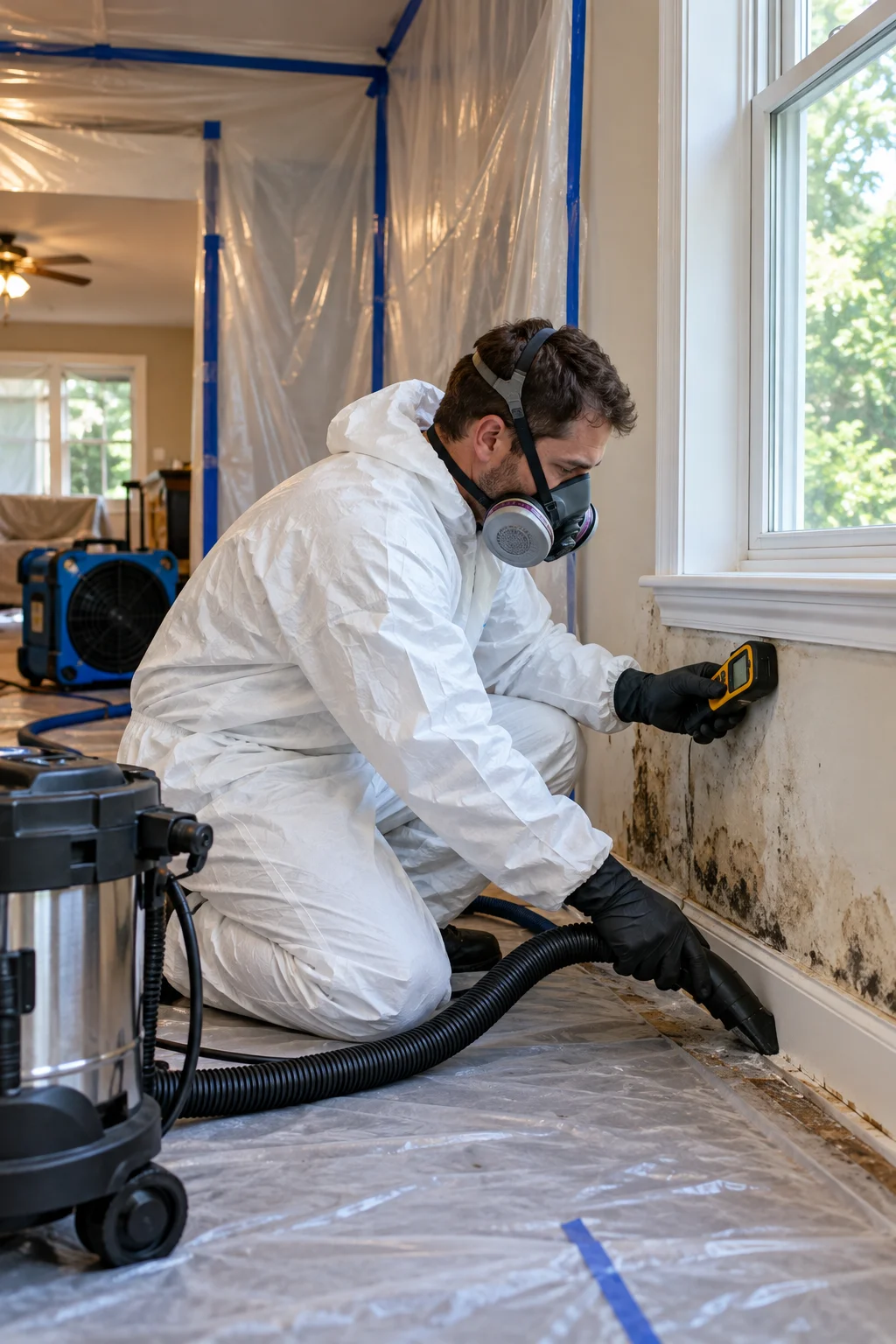
People miss mold in Huntersville because the obvious signs look like something else. A dark stain that blooms down a bedroom wall in a house closed all summer. A shadow across a ceiling below a condensate line. A fuzzy gray edge where a summer storm leak soaked a corner. Nobody saw the water arrive, because nobody was home. By October the patch is dry to the touch and looks settled, and a homeowner files it under stain.
The stain is the last thing mold leaves. The colony is in the paper and the gypsum behind it, waiting on the next drip. The test that separates a stain from a colony is simple: mold is soft and smears when you rub it, and the material behind it is usually soft or damp. A hard, dry, white deposit is a different story. If the patch is in a ceiling cavity, the AC and duct mold page explains where those colonies start.
Line open now
Mold growing right now?
Describe what you see or smell. You do not need to diagnose anything yourself.
§ 05 / 08
Where efflorescence fails here
Efflorescence fails Huntersville homeowners in the other direction, by looking scary when it is harmless. Summer storms drive water against block walls and pond at their bases. The water soaks in, migrates through the wall, and exits as a white bloom on the inside face. Homeowners see the bloom, assume the wall is growing mold, and sometimes get sold a mold job for a salt deposit.
Moisture problems in Huntersville can come from plumbing leaks, AC condensate, storm runoff or persistent indoor humidity. A closed room or a concealed wall cavity may remain damp even after the visible surface feels dry. Check the water source, document the affected area and arrange a moisture assessment when the cause is unclear. The EPA recommends drying water-damaged materials within 24 to 48 hours. Keep drainage working, monitor indoor humidity and inspect a previously wet area after the next rain. The condition of the individual home matters more than a neighborhood average.
Stucco shows the same story. Chalky white streaks below a parapet cap or a window sill are salts leaching out of the wall where rain has been soaking in. The streaks follow the water, which is what makes them useful: they are a map of where the wall gets wet, and the map points at the repair.
§ 06 / 08
What it costs and what drives the number
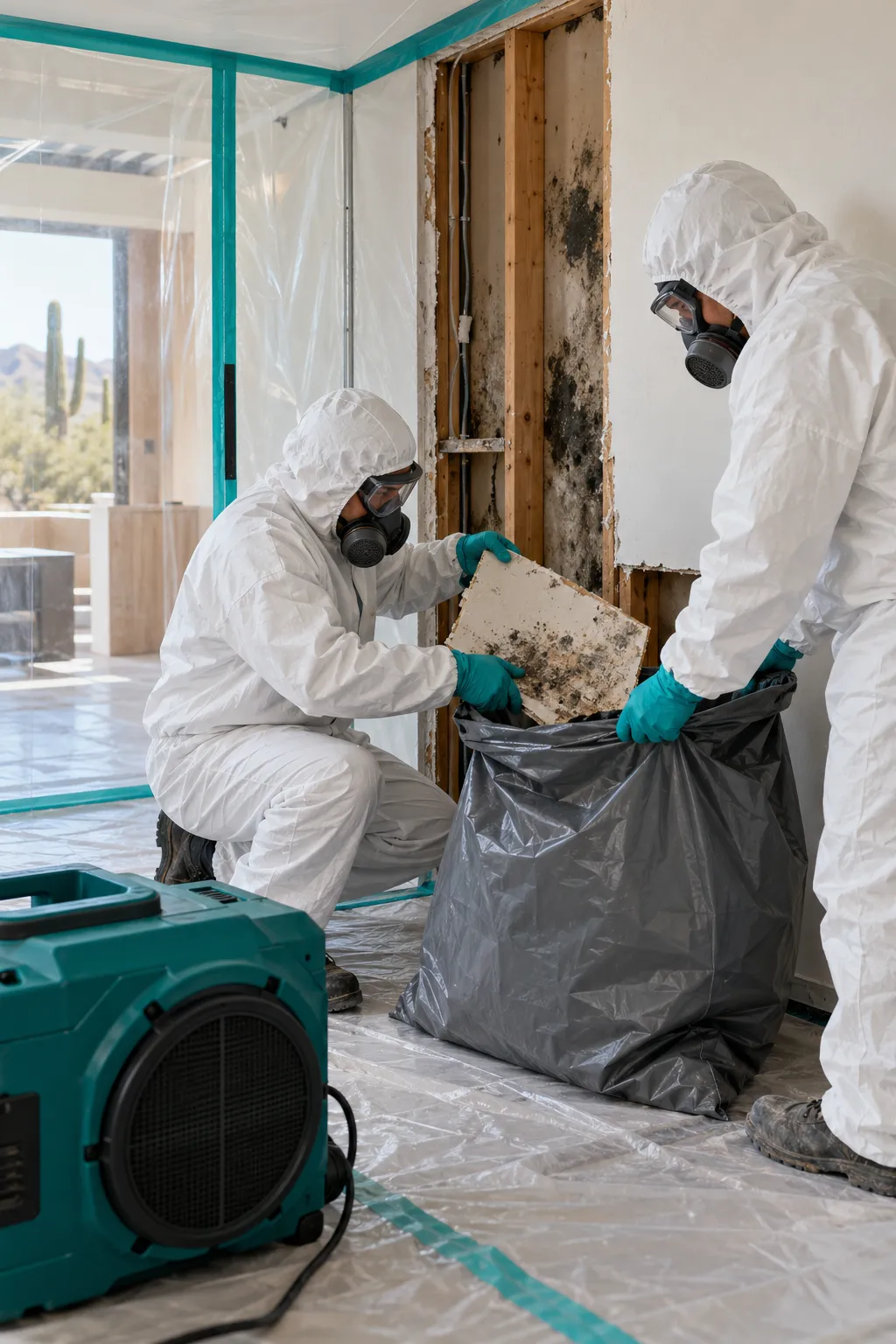
A salt crust is a scrub and a drainage question, and the number is small unless the water path needs real work: a downspout extension, a regraded planter, a repaired wall cap. Mold remediation is a different scale entirely, because material comes out and air gets cleaned. The number that matters is driven by which problem you actually have, and misdiagnosing it in either direction costs money. The pricing page shows how a real remediation scope is built, so you can tell the difference between a quote for a colony and a quote for a crust.

§ 07 / 08
What good work looks like in Huntersville
- The water test comes before anything else. A drop of water dissolves efflorescence on the spot. Mold just smears.
- Remediation is not for salt. If it is minerals, the conversation is about drainage, not demolition.
- The water path matters more than the stain. The answer is usually outside the wall, in a downspout or a planter bed.
- Knowing plainly which one you have is the whole point, because it saves you from paying for the wrong job.
§ 08 / 086 questions
Mold vs Efflorescence: your questions
01How do I tell efflorescence from mold?
Put a drop of water on it. Efflorescence dissolves into the water; mold smears and stays. Efflorescence is hard and crystalline, and it has no smell. Mold is soft and organic.
02Is efflorescence dangerous?
No. It is salt, not a living thing. It does mean water is moving through your wall, and that is worth chasing down, but the crust itself is harmless.
03Can efflorescence turn into mold?
No. Salt does not become fungus. But the same water that makes the salt can feed mold elsewhere, wherever it reaches drywall or wood.
04Why does the white crust keep coming back on my block wall?
Because the water path is still there. Summer storm rain against the wall, irrigation at the base, or a leaking wall cap keeps feeding it. Fix the path and it stops.
05Do I need mold remediation for a white crust?
No. A mineral deposit needs drainage work, not containment. Anyone quoting mold work for it should explain why, in writing.
06When is a white or gray patch actually mold?
When it is on drywall or wood, feels soft, smells musty, or is paired with a stain from above. Then it is a water problem with a colony attached, and it is worth a call.